

Was Gen. George Thomas Right – A Civil General Controversy
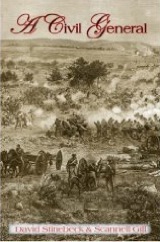 This article was inspired by the historical novel A Civil General, about George Thomas, a Virginian who became a general in the Union Army during America’s Civil War. Published by Sunstone Press, the book was co-authored by David Stinebeck and Scannell Gill, who wrote this article for ArmchairGeneral.com.
David Stinebeck, whose great-grandfather fought under General George Thomas and recorded the experience in his diaries, has a BA from Stanford University and a PhD in American Studies from Yale. He is the author of Shifting World: Social Change in the American Novel and co-author of Puritans, Indians and Manifest Destiny.
Scannell Gill graduates from Union College, has an MS in Marriage and Family Therapy from the University of Rhode Island, and is writing an original analysis of the multifaceted roles of women in society. Together they are working on a trilogy of novels based on the racial and economic history of Nantucket Island.
Thomas refused to accept a war of attrition as an honorable and reliable way for the North to win.
During the American Civil War, Union general George Henry Thomas’ fighting style—to crush the enemy in big battles and avoid a war of attrition—worked in the Western Theater, and differed significantly from the fighting styles of Ulysses S. Grant, Robert E. Lee, and William T. Sherman. Thomas was an intense tactician and strategist—thinking through all scenarios in the campaign and battles ahead—and he was certain that his kind of thinking was the quickest and best way to win the war. He was determined both to defeat the Confederate army in the West in a big battle or two (which his men in fact achieved at Missionary Ridge and Nashville) and to do it with fewer casualties than on the other side. Our careful accounting of all of Thomas’ engagements was unable to unearth a single one in which his men suffered more wounded and dead than the opposing forces.
{default}But Grant and Sherman had a hard time trusting this kind of thinker and leader, and not just because he was a Virginian. Thomas wanted to be left alone to do his job and hated to curry favor with those above him whom he publicly supported but whose leadership, we believe, he did not respect. There is a scene in the novel, after Grant slogs his way to Chattanooga following Vicksburg, in which the two of them confront each other over Thomas’ personality. Grant basically says to Thomas, whom he has just picked to lead the Army of the Cumberland, why should I fully trust someone who does not play the game and curry favor with or climb over those above him, someone who turned down two earlier promotions because he did not want to appear ambitious?
Grant bullies Thomas in this scene but scores points against a general who wants only to do things his way and be judged on nothing more than the results. This, we believe, was also Thomas’ motive in having his wife destroy all his personal papers upon his death: he wanted to be judged only on his performance in battle—to dissuade any aspersions in the North that he was a Southerner or ridicule from Southerners mocking his service to the Union. He died of a stroke five years after the war while writing a defense of the remarkable victory at Nashville in response to an unfounded, anonymous attack by a fellow Northern general.
While Thomas refused to accept a war of attrition as an honorable and reliable way for the North to win, Grant was willing to overwhelm the South with numbers and was unconcerned about casualties on either side. He and Lee in the East tried to wear each other out, regardless of the loss of life. Thomas, from all indications, was appalled by this approach to war. He was convinced that dramatic, overwhelming victories by the North would, in fact, save lives on both sides, and bring the South to its knees far quicker. Grant and Sherman certainly felt they had won the war with their quite different strategy. We leave it to historians to judge whether Thomas’ approach would have worked as well in the East as it did in the West.
George Henry Thomas, we argue, saw America whole—all regions and all races. He could not imagine the North and South surviving without each other, and he fought with remarkable success to hold the nation together. The 10,000 people who came to his funeral in Troy, New York in 1870 understood that, as did the endless columns of soldiers who passed by the monument (at “Thomas Circle”) erected to him by his men in 1879 in Washington, D.C., the single biggest celebration in the country’s history up to that time. Thomas fought fiercely to save America for all of its residents, men and women, white and black alike, North and South. Today’s leaders can learn a great deal from him.
Question: Would George Henry Thomas’ style of war have worked as well in the East as it did in the West? Was it, in fact, both an honorable and reliable way to fight this particular war?
Our answer is that we simply do not know if it would have worked as well in the East, where a resounding victory on either side would have had devastating effects on public opinion. As for the second question, the results speak for themselves: his men won and the public knew they had done so with a commander who minimized casualties as much as possible.
What’s your opinion? Post your thoughts in the Comments box below.

Although I think that George Thomas is a great General I don’t think his tactics would have worked in the East for the following reasons.
1) His deliberate thinking and strategy would not have worked against an aggressive General like Robert E. Lee. While he was pondering Lee would be attacking.
2) Thomas being from Virginia would never gain the full trust of the Army of Potomac. When Grant took over the Army it had a great mistrust of Commanding Generals.
3) Thomas while a great strategist was not a visionary and I believe his ability to think beyond the task at hand was limited.
Regards,
Rich Guida
Author of the Civil War novel “The Winds of Change”
1. “While he was pondering Lee would be attacking.” You’re ignoring Thomas had the best scouting, spy system, and map-makers on either side. His picketing system was the standard for forward notification of enemy position and movement. The Army of the Cumberland wasn’t once jumped on unsuspecting.
As you know, he was one of the few, perhaps only, Union General who’d been in service since leaving West Point. Lee wasn’t getting the jump on Thomas ever.
2. “Thomas being from Virginia would never gain the full trust of the Army of Potomac.” A fabrication. All any soldier wants is for his General to take care of and lead him properly. They don’t give a damn where he was born. Thomas was the nonpareil in having his Army fully trained and fitted.
3. Not a visionary? The 20th century US Army development of Command and Control comes specifically from Thomas and no one else.
I agree with your assessment completely. I will go on record and say that Thomas was the best general on either side of the Civil War. Had Thomas been at Gettysburg he would have destroyed Lee.
Although Grant’s bitter if ultimately successful campaign leading the Army of the Potomac against Lee was extremely bloody for both sides, he won his decisive victories in the west at Fts Henry and Donelson, at Vicksburg and at Chattanooga (where he commanded Thomas) with comparatively moderate casualties. Only Shiloh was truly bloody on the Eastern scale. At Shiloh Grant was defending against an all-out Confederate surprise attack, and he stood his ground at staunchly as Thomas at Chickamauga, but in his other Western victories Grant himself used surprise and manuever to keep casualities low.
This wouldn’t work against Lee, who anticipated and tenaciously contested each manuever by Grant. If Thomas had faced Lee in the east, he would have been force either onto the strategic defensive (like Meade after Gettysburg) or into a bloody battle of attrition (like Grant after he took command.) Another way to think of it: Grant was too good a general to allow Lee to win another Chancellorsville, and Lee was too good a general to allow Grant another Chattanooga or Donelson. So, instead we had this terrible war of attrition in which neither side could win a brilliant victory and sheer weight of numbers eventually prevailed.
In the spirit of your handle, “Learning Curve”, you might want to do a bit more research into what actually happened in those battles; particularly Shiloh and Chattanooga.
For the Union bloodbath at Shiloh, Grant would have been cashiered for incompetence and neglect but for his and Sherman’s political connections (which included Lincoln himself).
Chattanooga was managed, despite Grant, by Thomas. Any in-depth study of the record, and there are many, shows clearly that Thomas put the Union Army in the best position to win. Not Grant.
Have to add Grant and Lee as opponents placed the two most careless of soldiers’ lives against one another. Of course they waged battles of attrition.
I don’t believe Thomas’ vision would have succeeded in the larger Eastern theater.
My assessment is that the large battle defeats had less effect that the steady debilitation of the Confederacy. The loss of supplies from the Trans-Mississippi after Vicksburg, the blockade, and drain of fighting men from the the attrition campaigns pretty well complete that inexorable equation for the war.
Lastly, if Thomas’ perspective had been allowed to prevail, the lasting and unifying effect of the war may not have been so powerful. There is no doubt that the enormous loss of life in the war is a factor in the eventual unification of the country. The war’s horrors reinforce our current convictions of “The” United States as oppose to “These” United States as used antebellum. It may seem ghastly but the death toll from a war of attrition may have helped us become a stronger nation.
After all it was R.E. Lee that said “It is good that war is so horrible, lest we learn to love it too much.”
Based on his performance at those battles he commanded relatively ‘unsupervised’, Thomas seemed more than any other major commander (other than, it pains me to say, McClellan) that preparation was the key to victory. Put him in command during the Seven Days– would he have folded as did Little Mac? At Antietam, would he have failed to coordinate his army as badly as did McClellan? Would his command have allowed the tragedies of the Battle of the Wilderness or kept the components acting in synchronicity as Grant/Meade failed to do? At Chancellorsville, would he have collapsed as did Hooker? He planned well, prepared his fight and his army well, and executed better than any of the bombastic generals that too often led the armies of the US. As for responding to the operational agility of the Army of Northern Virginia, don’t forget Thomas earned his fame on the defensive at Chickamauga. Lee was a great general, and the ANV a great fighting force, but the combination succeeded to a great extent by the truism: ‘better an army of sheep led by a lion than an army of lions led by a sheep.’ The Army of the Potomac deserved a general like Thomas, who may not have whipped Bobby Lee (though I think he could have, and would have at Antietam), but would have spared that army the waste of such fights as Antietam, Fredericksburg, Chancellorsville, the Peninsula and the Overland Campaign.
I AGREE
THOMAS WAS IN MY OPINION THE BEST GENERAL ON EITHER SIDE.
I agree. Thomas in my opinion was even better than Lee, Grant, Sherman, Forrest and Stuart. I wish he got more credit for what he did and I also wish he was just as famous as all the other great generals. He was also a good man. In fact, I think he had to be the best general of the war.
Thank you. I’d only disagree (just slightly) on his whipping Lee. He’d have whipped him every time. Lee would never get the jump on an army led by Thomas. They were close personal and professional friends, remember. Lee KNEW how good a soldier Thomas was. I’ll go so far to say that Lee would have been reticent to attempt some of his attacking moves against Thomas for just that reason.
Certainly Thomas liked to prepare and was a thinker, tactician, and strategist. But don’t confuse that with an inability to act quickly and powerfully when needed. It was in large part the efforts of Thomas at Chickamauga that ground Longstreets incredible breakthrough to a halt when the rest of the union leadership had fled over the mountain. He saved the Union army from certain destruction and earned the moniker, “The Rock of Chickamauga”.
Thomas’ reputation for being slow was mostly due to the jealousy & antagonistism of Grant, with help from Sherman. The former berated Thomas for slowness at Nashville (weeks) while himself leading the blisteringly fast assault ( 3+ months) on Richmond-Petersburg; the latter while “foraging” his way through the indefended south with 2/3 of the army, having left Thomas to scrape together a force with which to fight Hood. Of course Thomas could have attacked sooner at Nashville – if going off half-cocked without parity in infantry, with horseless cavalry, in horrendous weather is the recipe for anything except disaster.
Remember Little Mac (at his highest) always outnumbered his foe, was never satisfied with less than 110% of his wish list of equipment, and at best fought to an inconclusive draw.
Grant destroyed men in frontal assaults to wear down his opponents until statically depending on a crisis of logistics beat them or ran them out of their lines. Sherman also leaned towards stand – up fights that yielded little but heaps of dead soldiers and when Hood wouldn’t stand he left him to Thomas while he went off to defeat farms and towns, cows and mules.
I would like to see a fantasy football – like wargame where all the great commanders’ stats are entered and they can go head to head in the arena of battle. I would bet on Pap against all comers.
A couple of other posters have made this point, but I will put it a different way. Thomas’ attitude was very much like Grant’s and Lee’s, and all 3 differed sharply from all of the commanders who preceded Grant in the East. That is, they all believed that the opponent’s force was the objective, rather than a spot on the map. All 3 believed in battle’s of annihilation and sought that whenever they could – with “whenever they could” being the operative term. Lee sought annihilation at 7 Days, but the terrain and immaturity of his army prevented it. He sought and largely won it at Second Manassas because Pope walked into it. He failed at Chancellorsville and Gettysburg because the force imbalance was too great. Grant sought annihilation at Henry and Donelson, and got it because his enemy obliged. In his most skillfully-executed campaign around Vicksburg, he won annihilation despite the ridiculous complexities of terrain. And Thomas sought it at Nashville, and won because of his own skill and Hood’s near-insanity.
Lance is correct in all aspects of his description, except for a couple items.
1. Sherman started the defamation of Thomas as slow as early as 1861. Grant picked it up after Chattanooga and continued until his (Grant’s ) death.
2. Grant’s “blisteringly fast assault†actually was more like eight months.
3. Sherman left Thomas with so few troops that after the Battle of Franklin when Hood and Schofield arrived in front of Nashville simultaneously so did Smith and his Israelites.
4. Most of the Union troops at Nashville were rookies, some were not trained (about 15,000), and about 10,000 were unarmed. Thanks to Sherman who took two of Thomas’ Infantry Corps and most of his Cavalry. ONE WAS THE 14TH, Thomas’, pets who he trained from Kentucky and who Sherman sneakily wrote to Grant that they were abysmally slow.
5. Sherman never wanted to fight “battles.†He admitted as much to his daughter. When he did fight, he always lost e.g.: Kennesaw Mountain, Bentonville.
Couldn’t describe Grants “strategy†any better than you did.
Don
Do you folk’s read anything but Grant, Badeau’s, and Sherman’s memoirs?
Thomas destroyed one Rebel army at Mill Springs and another at Nashville. Forced Bragg into a staff job after Chattanooga and retired Hood after Nashville. His pursuit of the AOT after Nashville was the longest by any side in the war. He staved off the complete defeat of the AOTC at Chickamauga and had he been in command at the start of the “Atlanta Campaign†the war in the west had a good chance of ending on ~May 15. Had that happened there would have been no Rebel army in the west. Lincoln may have lived to enjoy his grandchildren. Assuming Grant et al could have overcome Lee and the ANV, thirty to fifty thousand troops may have returned home in August. Had Thomas gone east to help, maybe June.
You who chime in with the Grant/Sherman chant Of Thomas’ slowness, certainly recall that after Mill Creek Thomas planned to attack Knoxville and secure East Tennessee for the Union. But, his commander W. T. Sherman dithered, recalled him and suffered a mental breakdown. After Sherman’s removal Buell had other ideas for Thomas. Thus was lost Knoxville, the Tennessee Virginia railroad and the opportunity to cut off the main Confederate supply route to the great granary of the Midwest. Does that count as being slow?
How about when crossing the Chattahoochee Thomas was attacked by Hood in the midst of crossing. Thomas personally directed placement of Newton’s division’s artillery, sped up the horses with the flat of his sword, lined up his artillery, directed their fire and destroyed Hoods attack. Was that slow?
In addition, you all must know that Sherman’s plan to cut Johnston off from Atlanta by sending McPherson’s undermanned force thru the Snake Creek Gap originally was planned and submitted to Grant by Thomas. Grant ignored him completely. Sherman, claiming the plan as his own, ignoring simple military strategy sent McPherson with 23,000 infantry and about 600 cavalry thru the gap that Thomas planned to send his AOTC with 60,000 infantry and 10,000+ cavalry. Sherman, with his superior military acumen, had Thomas act as a diversion and McPherson as the strike force.
Although Sherman blamed McPherson for being timid he refused Thomas’ requests to send two of Hookers divisions as backup assuring McPherson’s defeat.
Now, I can supply many more examples of Thomas’ alacrity, tell me, without using his preparatory methods as examples where was old Thom slow?
Don
Don, you’re right on it. We have to always keep in mind that setting the record straight on Grant, Sherman, and Thomas will take time. Grant and Sherman wrote their books and the general public followed. Unfortunately, too many “historians” (AKA lazy bastards) have done the same. Thomas will wind up where he belongs in our military history.
Let’s also keep in mind how wildly popular Thomas was by the end of the war and until his death. Equally as popular as Grant and Sherman. He died. Sherman’s fiction (autobiography) and Grant’s smothered all that as time went by into the 20th century.
An interesting new book bears examining: Master of War: The Life of General George H. Thomas, by Benson Bobrick.
I will not quote in any detail from it; however, I would mention an aside Bobrick made from Bruce Catton, that the only two times a Union army drove the Confederates from the field in rout was at Chattanooga and Nashville – and Thomas was the common link to both battles.
And Bobrick noted that the only time Thomas was slow was when retreating under fire.
When you read Master of War, have War As I Knew It and Marine! The Life of Chesty Puller handy, and see what Thomas’ fellow Virginians, George Patton and Chesty Puller, say about war, and how similar their thoughts are to Thomas’.
Bobrick certainly didn’t pull punches. Haha.
Theoacme said:
“the only two times a Union army drove the Confederates from the field in rout was at Chattanooga and Nashville – and Thomas was the common link to both battles.”
There was a third, also by Thomas. At Mill Springs in 1862 he drove the Rebels so hard they couldn’t collect enough of the survivors to reform the unit for several months.
A small fight but the first victory of the Civil war.
While one may look to specific battles as testament to the abilities (or not) of some Union Generals it is not to be overlooked that the Civil War unfolded on many fronts in different ways. Lincoln, himself, took a major “hands-on” approach, juggling generals with politics. Northern sentiment changed dramatically as battles were won or lost and newspapers were read; perception ruled over fact, not to mention ideology after the emancipation proclamation. The late employ of Southern ‘entrenchment” led to a methodology of attrition, rather than frontal assalt. Lessons were learned in blood. While one could see a man such as Thomas succeeding in the Peninsular campign where McClelland failed, it would be difficult to see anything but seign as the least bloody option to what greeted Grant at Petersburg. Every battle, moreover the WAR as an ultimate Union victory, demanded different tactics and occassional heated tempers. One therefore, can’t compare “the cream that rose to the top”, Grant, Sherman, Thomas and a few others as “best” or “worst”. Considering all the contributing factors each of these generals achieved the END by their means, either in combination of or apart from and should not be rated by battle or personaliity alone.
Thomas was the superior General to both Sherman or Grant. Grant’s strength was tenacity. He would simply out last his oppodent and wear them down. He was lousy on preparation. The Navy won at Henry. Without Smith he would have bungled Donaldson. With Smith out of action he and Sherman were caught completely unprepared at Shiloh in spite of warnings of the underleanings of the Confederate presence. Halleck repeatedly told him to fortify his position at Shiloh, but Grant and Sherman couldn’t be bothered. Against Lee the only reason he was successful was by wearing the Confederate Army down. At Chattanooga if the much discredited Army of the Cumberland hadn’t pulled Sherman and Grants bacon from the fire would have ended in failure. It was Baldy Smith’s plan that opened up supply to Chattanooga as presented to Grant by Thomas. When Thomas’s troops took Missionary Ridge Grant was already trying to blame Thomas and his troops for Sherman’s bungleing.
Sherman’s only quality was his loyality to Grant. He never won a battle on his own. The Confederate Army of Tennessee under Johnson would have been destroyed if he had listened and used theThomas’s plan as presented instead of modifying it so his Army of the Tennessee could get the credit.
Thomas organized his Army in such away that is the basis still used today. Thomas was the only Union General that never lost a battle that he was in Command. Thomas was a honorable man who always put the success of the Union Cause ahead of personal gain. He was considerate of the well fare of his troops first. That was why those troops sprang to his defense when Grant, Sherman, and their cronies. Thomas’s success was done with out political influence unlike Grant and Sherman. Thomas would ride around his troops instead of making them get out of his way. When offered the canteen of one of his soldiers, he refuse saying that the soldier should save it for himself. It was under him that the “Lighting Brigrade” was formed. A mounted infantry brigrade equiped with spencer rifles that became his special strike force. It was Thomas’s intelligence system that caught Davis. Thomas was a professional. Thomas made sure that his Officers had the same maps that were kept updated by his Calvery and Scouts. Careful, intelligent planning for all contigencies, logistics, and coolness under fire were all keys to his success.
It would have been extemely interesting to have pitted him against “Stonewall”. The “Rock” vs. “Stonewall”. Jacksons aggressiveness against Thomas’s coolness.
Actually Jackson and Thomas did go up against each other during a small battle in 1861 during the First Bull Run Campaign called the Battle of Hoke’s Run (also called Falling Waters). Although it was a small skirmish, guess who won the battle? Thomas won. Both men were colonels and commanded brigades, however it was a Union victory and Jackson was forced to withdraw. Thomas, in my opinion had to be the best general on either side of the war, even better than Jackson, Lee, Grant, Forrest, Sherman or Stuart.
Personally I think Thomas was a better strategist than Sherman and Grant and was better prepared for battle. I think Thomas was a better battlefield commander and always thought things through, thinking of all the scenerios before making his attack. Although he would appear to be slow, he did it in a way to find the perfect opportunity to strike the enemy, and when he attacked, he delivered an extremely devestating blow to the enemy, with as few casualities as possibly, so his victories were very decisive. Sherman and Grant on the other hand, were very aggressive and just attacked whenever they came across Johnston and Lee’s armies. They believed in getting the job done quickly regardless of how many casualties as possible, sometimes bordering on the reckless but destroying everything his army came across. Grant had far more inconclusive battles and lost more battles than Thomas as well. However Grant had more expendable resources than Thomas did. Also Hood’s army was also limited on resources too, so in a sense both of Grant’s and Thomas’s strategies worked. It all depends on the circumstances, and pretty much is what it is. Overall though as far as being a great strategist and battlefield commander, I would have to say Thomas was better at it than Sherman or Grant.
Thomas never faced a first rate opponent. His victories against Bragg and Hood bwere achieved when the Confederacy was in decline. Had he faced Lee, Jackson, or even Forrest I doubt he would have fared as well.
Over rated. Its easy to achieve victory when you outnumber and out gun your enemies. I’d like to see how well he would have done against Grant had he replaced Lee in 1864. I think the Confederacy wouldn’t have fared half so well, nor Grant faced such rough handling.
Never faced first rate opponents? Really? And here I thought he faced Stonewall in ’61, he faced Johnston, he faced Longstreet and his Corps at Chicamuga. So, if someone didn’t face St. Lee they didn’t face first rate opposition. Is the definition of great Southern General that they were never defeated by Thomas?
As for always outnumbering the rebels, hmmm how about the first victory at Mill Springs?
Thomas vs. Crittenden
4400 vs. 5900
Or how about Chickamauga?
Rosecrans started with 60000 to Braggs 65000 but he and a sizeable portion of his Army ran back to Chattanooga leaving the field to Thomas with somewhat fewer an 60000. Who won? Thomas with his force that was <75% the size of Bragg + Longstreet (and that's being generous to how many troops Thomas had left).
Yes, at Nashville Tomas commanded more men than Hood. However, Hood had veterans and Thomas has commisary troops, invalids, recruits, etc. and still won one of the clearest victories of the war.
No, again simply because Thomas never faced St. Bobby doesn't mean he wasn't the best all-around General the North fielded during the rebellion.
First-rate opponents? Thomas did actually face Jackson at Falling Waters just before First Battle of Bull Run while he was still commanding brigades and guess who won? Thomas won. Jackson withdrew from the field. Also during the Nashville Campaign, Thomas sent his rookie cavalryman James WIlson after Forrest and Wilson gave Forrest a serious butt-kicking. Wilson was the man who finally defeated Forrest (Wilson reported directly to Thomas during his pursuit of Forrest). And if I am not mistaken, Thomas (as a corps commander) faced the legendary Irishman Cleburne at Stones River and beat him there too. Thomas was the first-rate commander on the Union side as far as I am concerned.
Grant was inept and negligent in most of his battles. He concistently had high caulsality rates.
To show how bad both Grant and Sherman were take a good look at the Battle of Shiloe. Halleck, Grant’s Commanding Officier ordered him tto fortify his position. Not only did he not do this, but he allowed his suborniates to camp like they were on an outing. In their arrogance, Grant and Sherman ignored and belittled the intelligence and contact reports from their own People. They allowed the surprising and almost defeat of their Army. Instead of being heroes, they should have been Court-Martialed. The only battle that compares is MacArthur in Korea at the Chosan.
Knowing Thomas’s style, can you see him not having forified Defensive Positions? With his Staff having an Intelligence Officer for collilating of reports and information.and the importance he placed on it in his planning, Thomas didn’t make mistakes and was an expert at anticapating and reacting to the mistakes of his oppodents.
The nickname “Slow Trot” dates back to when he was an Instructor of Horsemanship at West Point. He was continuely telling the Cadets to fall into a “Slow Trot, Gentleman. It was his supposed good friend and Roommate at the Point, Sherman, and used later to demine Thomas behind his back.
Grant, Sherman, and the biggest liar of them all Schofield, were all the types to put self interest and promotion ahead of all else. Thomas was an easy mark for them because he was so honorable and honest it was difficult for him to see it in others. All you have to check their battle reports if you’re into fiction. They were equally adapt at stealing credit as shifting blame.
To me the most telling factor was Thomas’s ability to command the loyality of all who served under him with one exception, Schoefield, included the likes of “Fighting Joe” Hooker and William Farrar “Baldy” Smith, two smart, ambitous, and difficult Generals who drove others to distraction.
At a gathering of the AOTC and NAOT, following the death of Thomas, following some derrogative statements made ealier in the papers by them, Sherman and Schoefield were booed of the stage, literally. All these men years after serving with him rose to his defense and drove the offenders from the stage.
Lee vs. Thomas would have been very interesting. Lee the brilliant gambler against the Professional. Lee’s very strength could be turned against him. Taking a gamble against Thomas could turn badly. Something else to concider is that Thomas was second in command under Lee in Texas and the two men new each other extremely well. Thomas would have used the superior numbers both effectively and efficiently. You sure wouldn’t have had a Cold Harbor.
Thomas would not have been intimanated by Lee or underestimate him, and would have probabily been able to follow Lee’s thought process. Lee would have a hard time fooling him. Thomas was an expert at useing all three types of units, infratry, artillary, and calvery to their best advantage.
Lee vs. Thomas would have been very interesting. Lee the brilliant gambler against the Professional. Lee’s very strength could be turned against him. Taking a gamble against Thomas could turn badly. Something else to concider is that Thomas was second in command under Lee in Texas and the two men new each other extremely well. Thomas would have used the superior numbers both effectively and efficiently. You sure wouldn’t have had a Cold Harbor ,
I think if Thomas were in command of Gettysburg, instead of Meade, Thomas would have completely annihilated and destroyed Lee’s Army of Northern Virginia. He was master at both defensive and offensive maneuvers and was a genius in warfare. The war probably could have ended years earlier if Thomas were left in command of the Union forces. He was meticulous in planning and one may think at first glance he was cautious like the do nothing McClellan, however there is a huge difference between McClellan and Thomas. Thomas used his caution and planning to his advantage and found the perfect time to destroy his enemies. McClellan was just too afraid to engage in battles and would withdraw whereas Thomas would follow every movement of his enemies (like a lion stalks it’s prey before attacking them) and then strike the enemy with a devastating blow. He knew exactly what he was doing. He did his attacks in a way to minimize casualties in order to achieve a decisive victory. He was a genius in war and probably the best general on either side of the war.
We keep in mind they served together and were professional and personal friends. Lee would never get the jump on Thomas.
Grant the dullard. A common sentiment. When he came East, he was at pains to keep the trust of the leadership of the AOP, but Meade was not the man for the moment.
It was Meade who pulled up short in the Wilderness, setting the stage for the grinding Overland campaign. It was Meade who held Sheridan back because of reports that Stuart was operating near Fredericksburg, even after Grant voted to let the cavalry arm operate more aggressively. Grant shifted his whole operational idea on the spot. Initially, he’d even assumed that he would lead from out west.
It was Meade who panicked and ordered the 5th Corp to attack before locating their flank support, the 6th Corp. it was Meade who did not order or verify his subs planning of a coordinated offensive at Cold Harbor. It was Grant who sent the AOP south of the James, delivering enough force to bust the Petersburg lines. Smith and then Hancock held back. It was Grant who ordered the surprise attack at the Spotsylvania salient, bagging one of the ANV’s premier brigades and it’s commander (Steuart).
He assumed the bad roads and rain would forestall attack at Shiloh, and it was indeed these things that delayed the Confederates such that Bueregard advised calling the attack off.
It was Grant who placed Smith at Donelsen. A commander with no competent subordinates equals Braxton Bragg. (Cleburne excepted, and to some degree, Hardee).
True, Grant was prone to ‘point A to point B thinking, trusting the men and his own ability to improvise (Champion’s Hill). True too that Sherman was prone to favoritism. But he kept a force together that still had punch at Atlanta, leading the artillery reserve himself to thwart Hood’s Peachtree Creek offensive.
His handling of his supply train is still studied at the Army’s War College. The March to the Sea was by necessity a very closely enginered move, the columns had to stay close, there was no going back to collect stragglers. Then there’s the near-miraculous crossing of the Salkahatchee morass that drove straight up the middle of Johnston’s defensive line, causing him to abandon South Carolina.
Grant was socially autistic, proven by his inability to spot con artists, outside of braggarts (McClernand).
At the Crater, it was Meade who did not want Black troops leading the charge, men who had been trained specifically for this task. Ahhh, if only Grant had put on his hat, said, “I’ll lead it and take full responsibility,” Lee would have been leveraged out of his lines, unable to last the winter. Ulysees was at his best ‘hands on’, it wasn’t his nature to have to work at one step remove.
Remember, the odds in May ’64 were 2 to 1, they were still 2 to 1
in late July. It’s nonsense to state that Grant could take for granted an “infinite” supply of troops. The conscripts were proving more a headache than anything else. (See Lyman’s memoirs).
It took Grant 90 days to take the war from the Rapidan line to pinning Lee down for good. It was the ANV that was ‘stymied’, although I understand the Northern public’s sentiments on the matter. His aggresive extension of the siege lines created the rapid collapse of spring ’65.
Really, Grant’s decisive action caused the rapid collapse of ’65. Really? So cutting Lee and his Army off from supplies didn’t further that process? Gutting the West so completely and basically having the run of KY, TN, AL, and GA did nothing to further that process? The complete elimination of the only Army that could have possibly come to his aid (Hood) did nothing to demoralize Lee and his troops. It was all Grant. Wow.
Please do not misuse the term Autistic. I happen to practice in that arena and am somewhat of an expert on that term and diagnosing people with that range of disorders. Call Grant what he was – a drunkard.
I think Thomas had to be the best general of the war and in fact was even better than Lee, Grant, Sherman, Jackson, Forrest and Stuart. He should have gotten credit for what he did. Grant and Sherman did try to take credit all for themselves for what was due to to Thomas, however we must also think of what John Schofield did to diminish Thomas’s reputation. Schofield, in my opinion, had to be perhaps the lowliest excuse for a man ever produced in the Civil War and was a total jerk. Although he was a competent officer, he was full of ambition and did anything he could to advance his career, even if it meant backstabbing others to get himself promoted. He deliberately fed Sherman and Grant false information and lies about Thomas, just to get himself promoted for higher commands. He was expelled from West Point by none other than Thomas years earlier for basically turning Thomas’s class into a partying brothel when Thomas had an important class assignment and left Schofield in charge. That’s why Schofield wanted revenge and tried to get Thomas removed at Nashville. As far as I am concerned, Thomas did everything right and was a thorough professional and was also a great man. He did exactly what he was supposed to. He was good to his men, never had any ambition, was honest, modest and always put his soldiers needs before his.
Perhaps the luckiest break the Union forces received in the Civil War was the fact that Gen. George Thomas remained loyal. If he would have gone with the Confederacy – 1) he might have commanded the AOT in the west and Sherman / Grant would have received the butt whipping they both so richly deserved or 2) he might have teamed up with his old buddy RE Lee and Little Mac / AOTP wouldn’t have survived the Peninsula Campaign. Either way, the outcome of the CW would probably have been very different.
I disagree somewhat with the premise of the original article. I think that Gen Thomas was so good that he would have altered his strategy to fit the situation. He was versatile enough to do whatever was required.
Thomas was a master of the field. He never wasted his men, never lost a battle.
If Thomas had been in charge AOP Lee wouldn’t have had his successes. He wouldn’t have intimenated him or out Generaled him.
Thomas was able to command two of the Unions better and most troublesome Generals, Joe Hooker and Baldy Smith. After his death both of them repeatedly came to Thomas’s defence . Phil Sheridan said that he was the best he ever served under.
George H. Thomas, once serve under Robert Lee, would have found far more love within confederacy if he choose to break the oath. However, he did not. He took the moral high road, and above all, he was both warrior and peacebringer all at the time. Without making the loudest noise, he made the largest walk to crush Southern armies when it is necessary. Aside from Winfred Scott, he contributed the most to the war in the most meaningful way. Had he cast his lots with confedarcy, he would have been among Virginian Echleons and may have made Western theater far more bloodier affair.
Thankfully, that never happens. This would have been a different America.
I tend to agree with those who believe that Thomas would have fared somewhat better than Grant and Sherman, and I agree with them saying that his care for preparation, coupled with concern for his men, was more worth than his fellow General’s aim for a victory no matter the cost.
Someone called Thomas a ‘Professional’. This seems to me the most accurate definition : we shouldn’t forget that Thomas had experience in Infantry, Cavalry and Artillery before the war, one of the very few West Point graduates to serve in such a capacity. This is ground enough, I believe, to name him “Master of the Field”.
Moreover, his refusal of self-promotion (and his devotion, which is perfectly explained by his never taking a single day of leave during the entire conflict) was not caused by low self-esteem; he was offered command of the Army of the Ohio before Perryville and he refused, citing Buell’s complete preparation to meet the enemy in battle, yet he protested vigorously when they sent Rosecrans to command the army, citing his seniority and previous offering (he was silenced when they told him an outright lie, that Rosecrans actually was senior). And he wasn’t by any means a gloryhound : when at Missionary Ridge his men attacked by themselves, carrying the high ground, and Grant angrily asked him who gave the order, he sincerely answered : “I don’t know; I did not.”
Grant’s reputation has solidified as “good general, bad president”; Sherman’s is one of “harsh yet effective general”. Thomas, out of the circle of ACW fans, has none. So, before discussing Thomas’ hypotetical success rate against Lee, we should talk about making him known to the large public, and honoring him properly. I believe few can disagree with me when I say that at this moment he isn’t.
Those who have done any real studying of the Civil War know Thomas’s worth. The biggest thing working against us is Thomas and his seeming hatred of self-promotion. Thomas upon his death had all his personal papers burnt.
Maybe if we all contacted “The History Channel” or the Discovery “Military Channel” we could get them to do a feature on “The Union’s Best and Forgotten General”. Tom Hanks did the narration on the thing about Booth. Maybe he could be interested in the idea.
In a kind of way, the seemingly self-destructive act of Thomas may work for him; he didn’t want to be judged by out-of-contest and randomly chosen words and declaration. He wanted to be judged by his acts and his acts alone.
I would very much appreciate such a proposal; it would serve very well to raise some interest for such a figure.
Are there any accounts of what happened in Texas when Lee, the senior officer, was preparing to go South, and Thomas his assistant was staying with the Union? That must have been a rare stinkhole that Lee was standing in, especially because Thomas wasn’t blinded by the Glory that Glowed from Lee’s persona, later, and mighthave expressed a contempt that Lee was not accostumed to; and were they friends or just professional colleagues?
A)If Thomas had been an eastern general, and faced Lee and Jackson, who wins?
B) If Lee had accepted Lincoln’s offer, and took command of all the Union armies, could he have stopped it all?
Thank you, Richard, for your interest in General Thomas. If you give me the best address to send a copy of our novel about him, I will do so. My email is dstinebeck@comcast.net. Our novel makes the case that Thomas was far more than the most underrated Civil War general, he was a remarkable example of respect for all individuals and groups, and was understood by the American public for exactly what he was: a leader for the entire nation even as he fought fiercely for the North. His funeral and the dedication of his statue in DC ten years later were national events.
(Thank you, by the way, for your contribution to the arts all these years.)
David Stinebeck and Scannell Gill, coauthors of A Civil General
“Would George Henry Thomas’ style of war have worked as well in the East as it did in the West? ”
I didn’t have to. The war was decided by the campaigns from Kentucky to Atlanta (Army of the Cumberland). Actually, it was decided at the battle of Chattanooga which Thomas conducted behind Grant’s back.
I used to think that Grant was an impressive but significantly flawed general based on reading his memoirs and a couple of biographies. However, recently I have read two biographies of General Thomas (Master of War by Benson Brobrick and George Thomas: Virginian for the Union by Einolf). Both of these biographies appear to be slightly biased in favor of Thomas but regardless portray a remarkable man on so many levels. This seems to be lost in all the pros and cons regarding the relative abilities of Grant and Thomas as generals. Hands down, General Thomas was the better man. He showed an empathy for his fellow soldiers and other human beings, including former slaves. Don’t forget he was a Southerner and, despite this, showed a ability to change his view of blacks based an openness of mind that put a high premium on the facts. There are two terrific episodes during the war that demonstrates this: A detailed treatment of the unfairness of much of the treatment accorded the colored troops by many (but not all) white soldiers and officers would fill a book.
Comment by Bob Redman:
“I therefore return to Thomas in Nashville and begin now sum up: At the battle of Nashville the colored troops were used in as practical a fashion as possible under the circumstances without regard for their color. True, before the battle Thomas had his doubts about their ability to stand up to the battle conditions many of them were about to face for the first time. They had been, after all, mostly garrison troops and had little combat experience. However, the colored troops displayed bravery and other soldierly traits at Nashville, and Thomas recognized this. When riding over the field after the battle he saw their dead mixed with the bodies of white soldiers and said: “This proves the manhood of the negro” (fn42).
From Bobrick’s biography:
A “practical†and not an idealistic abolitionist, Bobrick writes, Thomas became one of the top advocates for the use of U.S. Colored Troops, unlike Sherman. When a captured Confederate officer turned up his nose at his USCT guards, saying, “I’d rather die than be taken into custody by nigger troops,†Thomas snapped, “Well, then, you’d better get ready to die, because these are the best men I’ve got!â€
I could go on but it is hard not to really like this man!
In addition, because Thomas didn’t write his own autobiography, and it has been suggested that Grant and Sherman wrote relatively self-serving ones that took on the perception of fact in the end, his version of events were not fairly presented.
Who knows, but, if I had been a Union soldier….and certainly a black one….I know with whom I would have like to be commanded by for sure.
See my review of Steinbeck’s “A Civil General” at Amazon books. Also my reviews at Amazon of the Thomas biographies by Bobrick, Broadwater, Einolf, Steele, and McKinney. Bobrick is almost there, but he still missed the significance of Hooker’s and Osterhaus’ crushing of Bragg’s left flank at Missionary Ridge, making possible the charge of the AotC up the middle (no miracle). See my article on Stewart’s defense of this flank at http://www.aotc.net/chatt-stewart.htm. I present there excepts from Stewart’s Division’s long lost reports, first published by Broadfoot in 1994. Moreover, Bobrick repeated the old saw about Sherman having “wrongly laid down maps” at Chattanooga. See my article “Smith’s Map” at http://www.aotc.net/Smithsmap.htm.
After checking out a number of the blog articles on your web page,
I truly like your way of writing a blog. I saved as a favorite it to my
bookmark webpage list and will be checking back soon. Please visit my web site too and let me know your opinion.
I love what you guys are usually up too. This
sort of clever work and reporting! Keep up the very good works
guys I’ve you guys to blogroll.