

War Stories: A Graphic History – Book Review
War Stories: A Graphic History. Mike Conroy. New York: Collins Design, an imprint of HarperCollins Publisher, 2009. 192 pages, trade paperback (9 1/2 by 8 1/2); profusely illustrated. $24.99, on sale beginning July 21, 2009.
Conroy’s survey also shows how each era’s comics reflected – and also helped to shape – public attitudes toward war.
 Mike Conroy’s War Stories is beautifully-presented, large format trade paperback (9 1/2 by 8 1/2) that is at once a nostalgic trip down memory lane for those of us raised on colorful, exciting “war comic books” in the 50s and 60s, and at the same time an insightful, near encyclopedic survey of a genre that continues to have fans flocking to book stores to buy their more modern incarnations. Conroy, editor of the monthly news and review magazine, Comics International, and founder of the prestigious Eagle Awards international prizes, is well qualified to write this comprehensive account covering a wide range of war comic books of the 20th and 21st centuries, and the book’s accompanying text demonstrates his mastery of the subject.
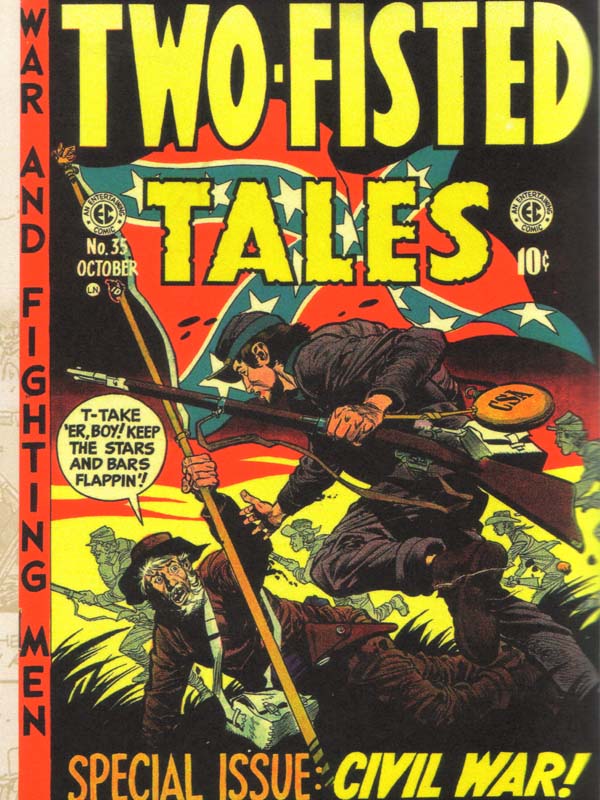 Organized in seven chronological chapters (Historical Hostilities; American Blood, American Soil; World War I; World War II; Britain Goes to War; Korean and Vietnam Wars; and Modern Day Conflicts), War Stories’ text is propelled and wonderfully enhanced by Conroy’s marvelous selection of representative examples of each era’s graphic art — comic book covers and interior story illustration panels. Understandably heavy in World War II examples – from the “golden age” of war comics in the 1940s and 1950s to the era’s continuing popularity as a subject in modern comic books – Conroy doesn’t neglect earlier eras, and the book’s scope is international. He includes graphic art and insightful commentary on Spartans (Frank Miller’s 300, of course), Pirates, swashbucklers, Napoleonic era (land and sea), the early American frontier (Tomahawk was this reviewer’s favorite way back when), Davy Crockett, the Wild West (Billy the Kid, Jesse James, the Lone Ranger, Custer, et al), the Civil War, and World War I.
 Conroy’s survey also shows how each era’s comics reflected – and also helped to shape – public attitudes toward war. World War II and Korean War era comics of the 1940s and 50s generally, although certainly not always – tended toward American and British patriotic stories, with the Allies’ German and Japanese enemies (“Japanazis” Conroy terms such depictions) typically shown in egregious racial stereotypes and clearly the “bad guys” in the stories. In the modern warfare chapter, however, covering subjects like the Bosnian war, 9-11 terror attack, and the wars in Afghanistan and Iraq, shifting public attitudes and rising anti-war sentiment in general has produced comics in which it’s harder to tell just who the “enemy” really is. The rise of “Comics Journalism,” as Conroy terms the phenomenon, has resulted in a trend in which many modern comics are being used as political tools to promote the anti-war agendas of authors and graphic artists. The beauty and power of the graphic artists’ skill makes “Comics Journalism” efforts especially compelling and frequently disturbing, and an extremely effective medium to promote a particular point of view.
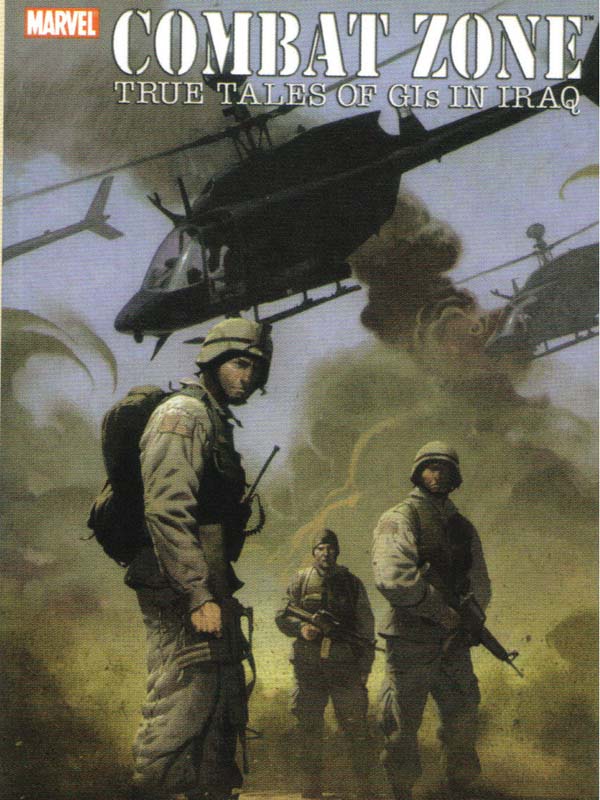 War Stories is an imaginatively conceived, beautifully presented survey of the expressive power of graphic art, an art form that continues to be a powerful and dramatic means of artistic expression – and a heck of a lot of fun to read! We highly recommend Conroy’s War Stories and definitely rank it in our “must read-must buy” category. Conroy’s text is insightful, knowledgeable, and well written. The images are terrific. We give this book “5 STARS,” our highest rating.
