


USS Robin – The Victorious U.S. Carrier that Didn’t Exist

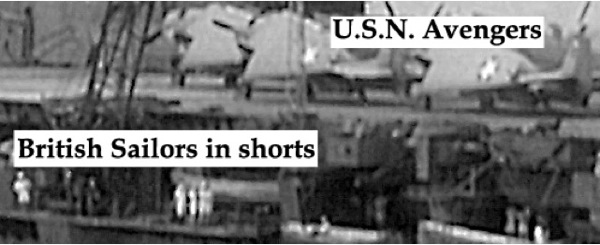
The photo above from the ACG archive was posted on Armchair General’s Facebook page recently. Viewers were asked if they could identify the ship. Joseph Tremain didn’t just identify it correctly, he wrote the following article for ACG about about the unusual story of the U.S. carrier that didn’t exist.
{default}It is not unusual for a ship to disappear at sea in wartime—but for a ship as a large as an aircraft carrier to suddenly appear from nowhere is noteworthy to say the least. That is exactly what it must have looked like to Japanese naval intelligence officers listening to American transmissions in the Pacific in early 1943.
This story begins in late 1942 when the United States Navy found itself in a precarious situation in the war with the Japanese Empire. At the Battle of the Santa Cruz Islands, the aircraft carrier USS Hornet was sunk and the USS Enterprise was severely damaged, temporarily putting it out of action. That left the USN with only one fleet carrier to carry on the South Pacific campaign in the Solomons. But in May of 1943, during Operation Cartwheel, which was intended to isolate and neutralize the Japanese base on Rabaul, a second fleet carrier suddenly appeared beside the only remaining operational US carrier, the USS Saratoga, which operated out of Noumea, New Caledonia. This new fleet carrier was being called the USS Robin, but it was not listed in the USN inventory, and it couldn’t be The USS Essex, which was nowhere near completion. Yet there she was—a full-sized fleet carrier complete with American Avengers and Wildcats on her deck. This mystery carrier, the USS Robin, might have become famous if it had taken part in any major fleet battle, but instead it has faded from all but the more detailed history books.
The truth was that the "USS Robin" as she was being referred to by many sailors, was actually a British carrier—the HMS Victorious (R38). It was never even really titled or re-named "USS Robin;" rather, it was code-named "Robin" for communication purposes, an intentional reference to the famous—or infamous—English outlaw Robin Hood. But with the lack of American fleet carriers to protect against potential Japanese carrier aircraft in the Solomons and provide cover for operations against Munda and Bougainville, the "Robin" was a much-needed addition to the weakened carrier fleet.
The short, strange story of the Robin began in December of 1942. The United States Navy found itself with only one fleet carrier operational and needed another large carrier to help assist in the theater until the first of the new Essex-class carriers became operationally available. The solution turned out to be simply making a request to the Royal Navy for a loan. The Royal Navy decided to loan the USN an Illustrious-class carrier, the HMS Victorious under the command of Captain L. D. MacIntosh, Royal Navy.
In January of 1943, the Victorious arrived at Norfolk Naval Shipyard, Virginia, to begin modifications and upgrades necessary to handle the American aircraft and equipment. After the Norfolk refit, the Victorious transited the Panama Canal and arrived at Pearl Harbor in March 1943 to join the Saratoga Battle Group, Task Force 14. Between March and May, the Victorious underwent additional modifications at Pearl to specifically handle the American versions of the Grumman TBF Avenger (or British Avenger) and F4F Wildcat (British Martlet). To complete the makeover and new look, the Victorious temporarily shed her typical British Atlantic "admiralty disruptive camouflage scheme" (irregular patterns of dark and light tones) for the American standard navy gray.
 On May 17, 1943, the Victorious, now code-named "Robin," along with USS Saratoga, arrived at the Solomon Islands as part of Task Force 36 commanded by Rear Admiral DeWitt Ramsey, USN. The Saratoga and Victorious would become the core of Task Group 36.3 under Rear Admiral F. P. Sherman along with the USS North Carolina (BB-55), USS Massachusetts (BB-59), USS Indiana (BB-58), USS San Diego (CL-53), USS San Juan (CL-54), HMAS Australia (D84, a heavy cruiser) and several escort vessels. Her ship’s crew was British, but her aircrew and aircraft were American. No one involved had any illusions that she wouldn’t be identified as the Victorious by enemy pilots, so she proudly flew her British Jack throughout her time with the Yanks, even when only the Yanks were flying on and off her flight deck.
The highlight of the Victorious’s very short career with the USN was her involvement in providing cover during the Munda landings on the island of New Georgia in the Western Province of the Solomon Islands. The Saratoga, with its larger complement of aircraft, supplied the strike force for the landing while the Victorious handled the air cover for the task group. Shortly after this, she supported the Bougainville invasion before leaving for home, and the name USS Robin was once again the sole province of its rightful owner, a long-time minesweeper recently converted to an ocean tug.
Although Victorious’s stint with the US Navy was not as illustrious as it could have been, that did not detract from her otherwise proud place in history. Before the USN loan, the Victorious was involved in the sinking of the German battleship Bismarck and, after returning to the Royal Navy, she took part in the sinking of Bismarck‘s sister ship, the Tirpitz. She would later return to the Pacific, once again working with the USN, and take part in the battle for Okinawa.


Thanks to Gerald and the rest of ACG for publishing the article.
Wow, I never heard of any of this and I consider my self an historian on WWII especially the Pacific area thanks for the information i loved it
I see that the article states that ‘Her ship’s crew was British, but her aircrew and aircraft were American.’ According to my copy of ‘Send Her Victorious’, the biography of the ship written by Lt Commander M. Apps, although the aircraft, Martlets (F4F-4Bs) and Avengers TBMs were American they were flown by pilots of 832, 896 and 898 squadrons of the Royal Navy Fleet Air Arm.
15 Avengers of 832 Squadron flew from USS Saratoga during operations in the Solomons in July 1943, ‘the first and one of the few occasions on which British Aircraft operated from a United States aircraft carrier’ (ibid)
Thank you for the information Paul. I would like to add that the H.M.S. Victorious carried American and British squadrons at various times and compliments during this operational period.
To add to your information that you supplied, FAA 832’s Avengers (these are true Avengers, not Tarpon variants later supplied to Britain) were assigned to air group 3 and operated off of U.S.S. Saratoga (CV-3) during June/July of 1943, and squadrons 896 & 898’s Martlets operated off of U.S.S. Charger (CVE-30). Victorious also had a fourth squadron, 882, made of Martlets, but 882 was assigned to the headquarters of Admiral Halsey, Commander South Pacific Forces, onshore at Noumea throughout the operation.
If you look carefully at the tails of the American Avengers and Hellcats you will see the American squadron white number(s) although they are not legible, and the absence of the FAA vertical striped flag. Although there could definitely be British Martlets and Avengers down below, there are only American aircraft on the deck.
If you find additional information on this bit of history, please let me know. Thanks.
My father served with Royal Navy from 1937 and on the “Vic” from 1941 – 1946 and he would shake his head in disbelief that they ended up with an Ice Cream maker and Coca Cola machine during her refit to serve with USN. He never knew the “Vic” was code named “Robin” until I found the information on the internet a few years ago. Another difference which he mentioned (not that he spoke very often about the war) was the American aircraft carriers had timber decks and how the “Vic’s ” steel deck saved her during Kamikaze attacks.
Jackie my fater was also on Vic at that time. Cheif ERA a a Barker.
I served on the Victorious as a midshipman when she was based at Portland . At that time she was no operational as a carrier
I can vouch for the fact that she was hit by, I believe, two Japanese Kamikaze suicide planes. They made a shallow dent in the deck armor and were quickly “bull dozed” over the side. Later one could walk the deck below and see two dents, about three to four inches deep, where the kamikazes had struck
Her original armament of 16 4″ guns mounted two to a turret at the four corners of the flight deck, plus several pom poms. The Yanks welded on three or so decks along the side of the “island” and filled them with Bofors and Oerlikons. As gunnery officer I can vouch that we had 141 guns in all. Nicely outnumbering the HMS Victory at Trafalgar with a mere 104 guns
My late father-in-law served during the Pacific deployment in 1943. He took some interesting pictures, including Chester Nimitz being welcomed aboard Victorious in Pearl Harbor in March 1943 and a party with hula-hula dancing girls performing on the flight deck on the same occasion. Also some shots of his mates and the aircraft they maintained. The aircraft have prominent US markings but one shot shows clearly the words “Royal Navy” discreetly on each side of the dorsal spine. I did some research. Victorious sailed from the Clyde in December 42 with two destroyers and a load of Martlets plus supernumerary FAA personnel to form and train in the US. It was decided to use the US name “Wildcat” to avoid confusion. 832 was issued with Avengers in Norfolk Navy Yard, Virginia, in January 43. These were standard US Navy issue with the “Royal Navy” identifiers presumably painted later on board. In shakedown operations en route to Pearl Harbor, the RN arrester wires were found to be too thin for the heavy Avengers, so modifications were carried out in Pearl. The Vic’ also had a diphtheria epidemic en route and medical supplies had to be dropped by a PBY. On arrival at New Caledonia, Victorious joined USS Saratoga in Task Force 14 and immediately sortied for a week hunting the Japanese fleet. Six “Martlet” types were lost in accidents and were replaced by “Wildcats” so, in practice, the FAA was operating the US and UK versions of the fighter at the same time. Evaluating performance, Admiral Ramsey was impressed by the fighter direction system on the Vic’ but not with Avenger handling – none of her cranes could lift Avengers, for example. Accordingly, he moved 832 on to the Saratoga and US Carrier Air Group 3 on to the Vic’. I think CAG-3 included some Dauntless but was mostly Wildcat equipped. So both carriers operated with mixed aircrew. Not sure if this involved any transfers of fitters and techs as well. In the operations to support the New Georgia landings in July, the Vic’ set a record for continuous time at sea by a British carrier. Not without incident – the potatoes ran out. Saratoga obliged with provision of something unheard of in the RN – instant mashed potato! An Avenger was modified to carry drums of smash and an unhappy cook was strapped into the rear seat to show the RN cooks how to use this mysterious stuff. The “Spud Express” was not a total success – the RN cooks didn’t quite get the instructions right and made four tons of the stuff!
Hi Jackie
My father also servied on the “Vic” when it was in the Pacific. He like your Father did not talk very often about the war. However, he did tell me the story about timber and steel decks and how it saved the ” Vic” on more than one occaision.
Cheers
Colin
was the victourious involved in the battle of okinawa
Yes Ken, in 1944 the Victorious returned to the Pacific after assisting in the sinking of the Tirpitz. In 1945, Victorious, Illustrious, Indefatigable and Indomitable operated as British elements working with U.S. Fifth Fleet in the battle of Okinawa. Victorious was successfully hit by three kamikaze attacks, which her metal deck protected her and allowed continued operations within hours of the hits. Victorious was also intended to take part in Operation Olympic if Japan had not surrendered.
This Commission was my fathers first Draft as a recently trained Air Mechanic drafted to 832 RNAS. He had is 21st Birthday of New Caledonia having travelled from the UK to Norfolk VA for the refit and then through the Panama Canal to Pearl Harbour before leaving for the South Pacific. He makes reference to American personnel looking after the aircraft and I have one or two photo’s of Avengers and Wildcats landing on. The Wlidcats (Martlets?) have Bristish markings and the Avengers US markings 4R on the fuselage. Its not clear if these are from the same trip however. I also have photos of march pasts of senior commanders including Admiral Nimitz.
Interesting period in our shared history
David, I would love to see digital images of the Vic. Personal photos taken by service members are hard to find and often allo amazing discoveries previously undocumented or unpublished. You can go to Jax Photo Evolution (one word) dot com to obtain my contact information. Thanks.
A job for the weekend as I need to take them from the Album dad put together at the time. Some photos taken by the ships photographer as well as some impromptu shots of USN and British Navy personnel working on Deck. 832 RNAS linked up with Saratoga again in May 1944 when 832 were temporarily deployed in HMS Illustrious. Illustrious and Saratoga were part of a task force deployed on raids against Japanese oil installations at Surabaya Java.
Best
Hi David,
I served on the Victorious 1957 to 1960, her first commission after her Post WWII refit, we visited the USA July and August 1959, but never traversed the Panama Canal.
Check out my home page. http://www.barrylockyer.com/ there is a link to the Victorious page.
I would appreciate copies of any photographs you have for my collection and the benefit of all ex Victorious Sailors.
Yours Aye
In the early years of US involvement in WW2 it was the British providing assistance to the USN rather than the other way round. In early 1942 the UK also had to lend the USN 50 anti-submarine vessels (and crews) and a Fleet Air Arm Squadron to protect New York Harbour.
The USN was totally unprepared for war (despite every warning) and ended up being far more dependent on the RN than they would of liked – so HMS Victorious was converted into USS Robin.
At Okinawa the British protected the USN southern flank and their aircraft carriers proved more or less invulnerable to Kamikaze’s, taking repeated hits with no effect – they literally ‘bounced off’.
Later US carrier design was modelled on the Illustrious class design principles.
Media and public perceptions of the Naval war in WW2 are very distorted. The British lost more ships in the battle for control of the Mediterrenan than the USN lost in the Pacific. British warship sinkings in WW2 were over twice as much as the USN.
The largest British carrier battle ‘Operation Pedestal’ is largely written out of the history books – mostly because it was carriers against land based aircraft. In terms of ‘air doctrine’ its very significant, because the carriers, which were very difficult to sink, could maintain local air superiority of the convoy they were protecting.
A lot of the British carriers were wrecked (Illustrious and Indomintable both had their hulls warped) but were still able to function. In contrast US carriers were easily put out of action – but easily repaired.
I disagree with the claim that “it was the British providing assistance to the USN rather than the other way round.” It is true that the RN temporarily lent 24 armed trawlers (22 A/S Strike Group), 3 destroyers and six corvettes to the US Eastern Sea Frontier in early 1942, of which 14 were available to that command by 1 April 42. The act was much needed and greatly appreciated, but it is hardly a fair, complete or accurate representation of the total mutual aid relationship of the time.
Further, the FAA squadron that was lent was to the RN’s benefit, not an act of charity to the US. At the outset of the US’s participation in the war, the US wanted to retain a shipment of coastal patrol long range bombers that were originally destined as aid for Britain. These aircraft were badly needed to strengthen the US Eastern Sea Frontiers’ defenses. As a compromise, Britain offered the temporary use of the squadron to ensure an uninterrupted supply of US-built patrol aircraft. In this light, we see the balance of aid was mutual, rather than one-sided. On the other hand . . . from Mar through Dec ’41, 2,400 US aircraft were provided to Britain; by comarision . . . during the 1942 U-boat blitz in the western Atlantic, the RN provided the US the temporary use of just one squadron. In this light, things do look one-sided, but in the opposite context.
But let’s put this in strategic perspective. For much of the previous 2 years, the US had been providing the RN every bit of aid allowed by law, and some that was not. This aid included not just materiel, but operational deployments that enabled the RN to concentrate its strength where most critical. In doing so, the US assumed risk at home, as it diverted war production from its own armed forces to those of Britain. Some examples:
– By 1940, France, Britain and the Commonwealth countries bought nearly 90% of US aircraft production.
– By the end of ’41, we had not only transferred the 50 destroyers, but an additional 10 Lake class 230 ft Coast Guard cutters (transfers that were not included in the eventual total of 886 ships transferred to the RN during the war).
– Despite the lack of escorts available to the USN, in mid-41 we committed to providing the RN 100 escorts. (78 DEs were eventually delivered; the RN’s Captain class frigates).
– Roughly half of the escort carriers built in US yards through the end of ’42 were given to the RN (38 total CVEs were transferred to the RN). By comparison The British built only 5 CVEs during the entire war, and employed one German prize in this role.
– The basing agreements had permitted redeployment of RN assets to other theaters, while the US assumed responsibility for security of those vacated areas. Backfilling those bases diverted US ships – and especially patrol aircraft – that later would be sorely needed off the US coast in early 1942.
– The Pan-American Safety zone was patrolled and enforced by the USN in the years leading up to Pearl Harbor. Reluctant to risk bringing the US into the war, Germany restricted its U-boats to the eastern Atlantic prior to 7 Dec ‘41. (Fewer than 5% of U-Boat sinkings between 1 March and 6 Dec 41 took place west of the Greenland meridian.) This vastly eased the RN’s task, enabling it to focus its limited strength in a tremendously reduced arena.
– The US had taken responsibility for protection of Greenland and its waters, and relieved British forces of the responsibility for Iceland.
– Further, 3 months before Pearl Harbor, the US “White Patrol†(2 battleships. 2 cruisers, 2 destroyer squadrons) had assumed responsibility for blockading German ship movements through the Denmark Straits (the possible break-out of the Tripitz being the fear).
– Beginning 3 months before the official US entry into the war the USN assisted in convoy escort duties in the western Atlantic, and from mid-Oct 41, had taken responsibility for escort of HX and fast ON convoys. In addition, we assumed responsibility for tasks such as convoying 20,000 British troops from Halifax to the Far East (and subsequently Australian troops from Suez to Freemantle, and delivery of reinforcements to Singapore) in US hulls, escorted most of the way by US warships (convoy sailing 10 Nov 41).
That’s a LOT of help to be dismissed so cavalierly, and yet it barely scratches the surface. The US badly hampered its own pre-war mobilization in order to help the RN cope with the U-boat threat in the eastern Atlantic. By comparison, it is remarkable how little the RN aided the allied effort when the U-boat threat shifted to the western Atlantic. And that’s the strategic point. When the threat was in the eastern Atlantic, the RN received extensive US support. When the threat shifted, it would only make strategic sense to shift forces to cope. But this the RN did not do, except for such minor examples as given. Instead, the extensive naval power the US had helped the RN field remained committed to a vastly reduced threat. (See maps on pg 58 and 124, Vol I, History of US Naval Operation in WWII for depictions of the dramatic shift of U-boat operations during this period.) At the least, it is a clear example of strategic inflexibility. At worst, a cynic might – unjustifiably – conclude the relationship was rather one-sided.
Clearly the original assertion is incorrect; the US provided ample assistance to the British during this period. The fact is, both sides needed each other badly, and aid flowed – generously – both ways to the degree that each could provide. No one over here has forgotten the Tizard mission, the origin of the plans for the invaluable classes of landing craft, or the battle-won expertise that was provided freely by the British. Nor are we unaware of the failings of the USN early in the war. But to belittle the contributions from this side of the pond is ungenerous, to say the least. In fact, battles such as the Java Sea demonstrate that both navies were fighting and dying together, and at that point, neither doing especially well, whether new to the war, or with a couple years’ experience under their belts.
Actually it was all about the UK defending the USA and teaching the USA how to wage war. . . .
Although in 1942 the Japanese and Germans were at the height of thier expansion its was clear to any one observing the strategy and economics of the war that Axis defeat was inevitable.
The UK and Russia had decided the course of the war with the Battle of Britain and the Battle of Moscow.
The war was essentially won in 1938 when the British made a planned switch to a war economy – some 5 years ahead of Germany. In 1941 the British were building more aircraft than Germany, Japan and Italy combined, 5,000 more than the USSR and 5,000 less than the USA.
In 1942 the USA was a liability. Shipping losses to U-boats had fallen steadily throughout 1941 only to reach spectacular levels with the entry of the USA into the war. All major historical authorities – Morrison, Roskill, Churchill, Bauer and even General Marshall are agreed this was entirely due the incompetence of the US Navy and the stupidity of Admiral King.
The correspondence between King and Marshall can be found in Bauers history and ends in effect, with an Army General correctly advising a US Admiral on maritime tactics. . . .
If we go further into the history we find that the USAAF in the UK was getting something like 70% of its supplies locally untill 1943 (its in the USAAF history).
The story of the USA ‘coming to the rescue’ of the UK is propaganda story that suited both the British and the USA. The reality was very different, starting with the Arcadia conference., where the British subtly forced US to model its war economy and planning on the British system.
The reality is the USA knew nothing about managing a modern war and learned everything from the UK. The history of the WAAC’s makes interesting reading if you want to go there, simply because it has the US Army learning (the hard way) exactly what they had already been told.
In 1939 the Poles brought the secrets of their decoding of Enigma to the British and the French. Had things been different and the British been really up against the Tizard mission would of gone to the USSR – and the British had a workable design for a nuclear bomb from the ‘tube alloys’ project
Britain and the USSR would of won, and the USA would be a minor player on the world stage.
It’s a fascinating insight into WWII that the French knew throughout WWII that the British were probably decoding German codes – but never let on. . . . .
Absolutely right. The assistance was from both sides and must never be forgotten. The Santa Cruz operation cost the US dear at a time when aircraft carriers were in short supply and I am sure it was with genuine gratitude that the UK was able to assist the US for this short time whilst the ESSEX class carriers came on line.
The British fought a highly technological and industrial war and did so very efficiently. Britain used not only her vast empire but her even larger trading empire to great effect – an army of 2.6 million marched into Burma. The British, with its massive navy, surrounded the Axis, from the Med (cutting off both entrances to the Med) to the Eastern Atlantic, starving them of natural resources, especially the magic oil (In May 1941 the Italian Navy could not put to sea due to lack of oil) and ensuring where the battles would be fought.
“Steel not flesh” was the slogan. The British assessed that having massive armies is highly inefficient. The larger the army the higher the casualties. Britain deliberately chose to keep numbers of front line troops as low as possible building machines and using technology advances instead – the BEF in France was the first army were men never marched – fully motorised. The Kangaroo was the first armoured personnel carrier developed in WW2 from adapted tanks, saving many lives, in contrast to the horrendous US casualties. The policy worked, despite fighting for the full duration, the only major country to do so, and all around the globe, the country had only lost around 440,000, which is half the British dead of the 1914-1918 war, which lasted two years less. Germany and the USSR lost considerably more troops than they had in WW1.
From the war came amazing British inventions: the cavity magnetron, the electronic computer, the world’s most advanced jet engines, anti-submarine electronics, the proximity fuse, as well as the Liberty ship (a Sunderland design), to name but a few. Massive developments in manufacturing, with a staggering 132,500 aircraft for such a sized industry, and over one million military vehicles. Canada alone produced more wheeled vehicles than Germany.
From the first American servicemen arriving in Britain in 1942, until VE Day, the British provided the USA with 31% of all their supplies in the European Theatre of Operations. Britain’s war effort was astonishing – backed by their insistence in continuing the fight in 1940. The British made an enormous contribution to winning the war, being the key agents. This had a positive effect on the future of the world. The declinist view of Britain in the war must be dispelled for good.
Very interesting. I only heard of ROBIN a few years ago and certainly no U.S. history books will acknowledge the help of the Royal Navy.
‘Pedestal’ however, may have been written out of the history books but the Merchant Navy has not forgotten it. Neither have the government or people of Malta as witnessed, I understand, by the annual service of remembrance in Valletta harbour.
Great work: I love these sites uncovering barely remembered, or entirely forgotten, facts and/or incidents.
We must never forget that the tanker OHIO was American though staffed by British Merchant sailors and officers. In was with the New Zealand shipping company and my companies Dorset was in the Pedestal Operation along with Port Lines Port Chalmers. Our seamen worked an served together from the very outbreak of WW2 and were from all nations.
Well gentlemen, I do not propose to get involved in who won the war ? however, a couple of small points that may be of interest.
The H.M.S Victorious Association, still has many members in its ranks who served, and were injured in the Pacific on Victorious.
Operation Meridan (one and two) when the attack on the Japanese fuel storage and oil refineries near Palembang, are still discussed after tot time at our meetings. This is history very real to many of our members. I would say, I have not heard any of these members( many of them who had already served two or three hard war years)speak about who did what in these theatres. However, I would urge you corrispondents not to over look the fantastic efforts and sacrifices made by so many young Canadians flying at this period.
Best Regards Stan McLellan Chairman HMS Victorious Association. ex Vic.
Thank you Stan. The intent of the article was not to credit every possible element involved in this overlooked piece of history, which of course would be almost limited, lol. The goal was to bring to light a piece of history that is practically lost within the annals of history, especially within WWII studies in the United States of America. If your association has a website, especially any page(s) detailing the ‘Robin’ codename and operations, please post them here, it would greatly enhance this article. Thank you very much.
First mention I have found at this point, advises.
” The carrier (Victorious) reached San Christobalat mid-day on the 10th Feb.1943, and preparded to pass through the Panama Canal. As she passed the USS Stalker,she intercepted a signal fromthe USS Massachusetts which read “What,s the Limey flat top?”. Although the reply was not decoded, for the purpose of security Victorious was generally refered to as the USS Robin- with a sense of humour and a knowledge of ornithology, there was scope for some interesting signals.
Taken from “send her Victorious” by Michael Apps Lt. Commander RN copyright 1971 SBN no. 718 0102 1 published by William Kimber and Co..
Apps commanded 814 squadron, and his book is generally taken as the definitive record of Victorious and her long career, but we live and learn.
I will ask some of our veterans at our next meeting, to see if they can shed further light on USS Robin, I do know a couple have mentioned the name in the past.
Hi Stan
My father William Dobbie served on the HMS Victorious (USN Robin) in the Pacific. My Dad died some years ago and I received his war service record and various other momentoes from his time on the Victorious. I was exited to hear that there are still some surviving members from the Pacific campaign. I live in Australia and will be in the the UK in mid to late September 2013. I would love to meet the survivors and speak to them about there time in the Pacific. Would this be possible? If not, I was hoping I could speak to you by phone say when I am in the UK.
Hi Colin, we have surviving members all round the globe, and several interested parties in Australia, (very popular place to head for after the war, and Victorious brought a large number of war brides back to Uk in 1945, many who subsequently did not not like the climate and headed back!
The main Victorious reunion this year will be held first week-end of October, which may be too late for you, we meet for the week-end in Coventry (central in the UK). I live in Leeds (northern England), and two of my very good veteran mates live with ten minutes of my home. One who was burned in a Kamakaze strike in 45, the other who served on carriers including Glorious and old Ark Royal (both sunk) served out his time in the Pacific on Victorious. Both fit, but not young men !!! would be happy to meet you I’m sure.We have lost a couple of our best this year, time takes its toll.
The Victorious Web site is http://www.hmsvictoriousassociation.com if you have a look on the sites “Gallery” we have a couple of thousand pictures there.Tab on WW11 file. All my details are on this site and I can be contacted there. there.or leave a message on the guest book. I will keep an eye on this site now I have found it.Best Regards,
Stan McLellan Chair Vic Assoc.
Hi Stan
Do you have any information on my father Robert Allan Procter (Bob)who was an Observer in the 832 Squadron. He flew with John Fay among others before being promoted to Flight Deck Commander on the HMS Begun
Not to be picky or ungenerous, but we NEVER say “the” before HMS – it of course being perfectly acceptable before USS.
That’s because the full name would be “… the Her Majesty’s Ship”, which is clearly grammatically unsound. Whereas “… the United States Ship” is obviously fine.
I know it’s sounds silly, but it really grates with us RN folk!
🙂
Mark, you are absolutely correct and, to borrow a line from Winston Churchill, this is something up with which we will not put. Sorry that slipped through; we’ll keep a closer eye out for “the HMS” in future. Thanks for pointing it out.
The same holds true for HMCS, HMNZS, HMAS, HDMS, and HNLMS for that matter.
It is rather ungenerous (not to say inaccurate) to state that “Operation Pedestal” is written out of the history books. As well as the pages devoted to it in Roskill’s 1950’s history, Volume 2, my book “Pedestal: the Convoy that Saved Malta” was first published in 1970 and has never been out of print since then, having been published in in five UK hardback editions, four UK paperback editions, three Malta paperback editions and an Italian hardback edition. It is still in print today. One well-known Web Site copied my book out word for word and received praise for “orginal research”….. Out of the history books? – Not quite!
Peter C Smith
Hello from Tucson, Arizona, USA!
Between 2000 – 2005, I was researching American Pre-War Aircraft Carriers from January 1941 to July 1943.
By December 1942, the USS Saratoga CV-3 was the only capable US carrier in the Pacific. The USS Enterprise CV-6 was a lame duck that was held in the South Pacific until some relief became available.
During my research, I found a little reference about a British Carrier in the South Pacific. At the time of my research, there little information about HMS Victorious’ first foray to the Pacific. The Royal Navy and Fleet Air Arm web pages glossed over this period in HMS Victorious’ career.
In Fahey’s “The Ships and Aircraft of the U.S. Fleet,” 2nd War Edition, there is an entry for HMS Victorious titled British Aircraft Carrier That Served With The U.S. Fleet. This entry has a picture of HMS Victorious with a caption “H.M.S Victorious – Operating with an American Air Group”. Here’s the description that follows:
“Through months of 1943 when U. S. carrier strength was at its ebb the 23,000-ton Victorious served with the Pacific Fleet. In lat May 1941 she helped run down the Bismark in the Atlantic. A triple-screw 31knotter, she is 753-feet overall, carries 60 Fighters or 36 VF’s and 18 VTB’s. The British Fleet Air Arm operates many U.S. naval aircraft. Up to March 1944 we transferred 38 Escort Carriers to Britain under Lease-Lend. The Illustrious and Formidable, sisters of Victorious, overhauled at Norfolk in 1941.”
Fahey, James C., “The Ships and Aircraft of the U.S. Fleet,” 2nd War Edition, Ships and Aircraft, New York, New York, 1944, pg 10.
At first glance without knowing the history of HMS Victorious, this entry in Fahey’s book is minimal, uninformative at best. But once you get to know HMS Victorious’ history – wow.
Here is some of my thoughts about Fahey’s entry.
1) In 1937, the U.S. Navy created a billet – Command, Air Group (CAG)
2) HMS Victorious had four squadrons with American Aircraft
a) 888 NAS – 12 F4F-4B
b) 896 NAS – 12 F4F-4B
c) 898 NAS – 12 F4F-4B
d) 832 NAS – 15 TBF/M-1
3) Fahey’s reference to “36 VF’s and 18 VTB’s” supports HMS Victorious squadron make up.
4) The primary lesson learned from the carrier battles in 1942 is Fighter Direction Control.
5) In 1943, some of the American Carrier Admirals advocated a fighter carrier and a strike carrier.
6) When HMS Victorious arrived in the South Pacific, the American officers were very interested in the FDC center.
7) For the Munda operation, USS Saratoga became the strike carrier and HMS Victorious became the fighter carrier.
8) In March 1943, the American carrier fighter squadron had 36 fighters.
9) Twenty-four American fighters were assigned to HMS Victorious for the Munda operation.
10) Fahey’s reference to “60 Fighter” supports the composition of HMS Victorious assigned squadron for the Munda operation.
Call signs:
1) Button was the call sign for Henderson Field on Guadalcanal.
2) Robin may have been the call sign for HMS Victorious.
3) Fahey’s entry do not have any reference to USS Robin.
Admiral King’s contemporary Admiral Pound(?) initiated the offer to send HMS Victorious.
Admiral King was not a big fan of the Royal Navy.
Here is a little history that predates and may have influenced HMS Victorious’ first foray to the Pacific.
After departing Norfolk on 14 January 1942, Wasp headed north and touched at Argentia, Newfoundland, and Casco Bay, Maine, while operating in those northern climes. On 16 March, as part of Task Group (TG) 22.6, she headed back toward Norfolk. During the morning watch the next day, visibility lessened considerably; and, at 0550, Wasp’s bow plunged into Stack’s starboard side, punching a hole and completely flooding the destroyer’s number one fireroom. Stack was detached and proceeded to the Philadelphia Navy Yard, where her damage was repaired.
Wasp, meanwhile, made port at Norfolk on the 21st without further incident. Shifting back to Casco Bay three days later, she sailed for the British Isles on 26 March, with Task Force (TF) 39 under the command of Rear Admiral John W. Wilcox, Jr., in Washington (BB-56). That force was to reinforce the Home Fleet of the Royal Navy. While en route, Rear Admiral Wilcox was swept overboard from the battleship and drowned. Although hampered by poor visibility conditions, Wasp planes took part in the search. Wilcox’ body was spotted an hour later, face down in the raging seas, but it was not recovered.
Rear Admiral Robert C. Giffen, who flew his flag in Wichita, assumed command of TF-39. The American ships were met by a force based around the light cruiser HMS Edinburgh on 3 April. Those ships escorted them to Scapa Flow in the Orkney Islands.
While the majority of TF 39 joined the British Home Fleet—being renumbered to TF 99 in the process— to cover convoys routed to North Russia, Wasp departed Scapa Flow on 9 April, bound for the Clyde estuary and Greenock, Scotland. On the following day, the carrier sailed up the Clyde River, past the John Brown Clydebank shipbuilding facilities. There, shipyard workers paused long enough from their labors to accord Wasp a tumultuous reception as she passed. Wasp’s impending mission was an important one—one upon which the fate of the island bastion of Malta hung. That key isle was then being pounded daily by German and Italian planes. The British, faced with the loss of air superiority over the island, requested the use of a carrier to transport planes that could wrest air superiority from the Axis aircraft. Wasp drew ferry duty once again.
Having landed her torpedo planes and dive bombers, Wasp loaded 47 Supermarine “Spitfire” Mk. V fighter planes at the King George Dock, Glasgow, on 13 April, before she departed the Clyde estuary on the 14th. Her screen consisted of Force “W” of the Home Fleet— a group that included the battlecruiser HMS Renown and antiaircraft cruisers HMS Cairo and HMS Charbydis. Madison (DD-425) and Lang (DD-399) also served in Wasp’s screen.
Wasp and her consorts passed through the Straits of Gibraltar under cover of the pre-dawn darkness on 19 April, avoiding the possibility of being discovered by Spanish or Axis agents. At 0400 on 20 April, Wasp spotted 11 Grumman F4F-4 Wildcat fighters on her deck and quickly launched them to form a combat air partol (CAP) over Force “W”. Meanwhile, the “Spitfires” were warming up their engines in the hangar deck spaces below. With the Wildcats patrolling overhead, the Spitfires were brought up singly on the after elevator, spotted for launch, and then given the go-ahead to take off. One by one, they roared down the deck and over the forward rounddown, until each Spitfire was aloft and winging toward Malta.
When the launch was complete, Wasp retired toward England, having safely delivered her charges. Unfortunately, those “Spitfires,” which flew in to augment the dwindling numbers of “Gladiator” and “Hurricane” fighters, were tracked by efficient Axis intelligence and their arrival pinpointed. The unfortunate “Spitfires” were decimated by heavy German air raids which caught many planes on the ground.
As a result, it looked as if the acute situation required a second ferry run to Malta. Accordingly, Prime Minister Winston Churchill, fearing that Malta would be “pounded to bits,” asked President Roosevelt to allow Wasp to have “another good sting.” Roosevelt responded in the affirmative. Rising to the occasion, Wasp loaded another contingent of “Spitfire” V’s and sailed for the Mediterranean on 3 May. Again, especially vigilant for submarines, Wasp proceeded unmolested. This time, the British aircraft carrier HMS Eagle accompaned Wasp; and she, too, carried a contingent of Spitfires bound for the “unsinkable aircraft carrier,” Malta.
The two Allied flattops reached their launching points early on Saturday, 9 May, with Wasp steaming in column ahead of Eagle at a distance of 1,000 yards. At 0630, Wasp commenced launching planes—11 F4F-4’s of VF-71 to serve as CAP over the task force. The first “Spitfire” roared down the deck at 0643, piloted by Sergeant-Pilot Herrington, but lost power soon after takeoff and plunged into the sea. Both pilot and plane were lost.
Undaunted by the loss of Herrington, the other planes flew off safely and formed up to fly to Malta. Misfortune, however, again seemed to dog the flight, when one pilot accidentally released his auxiliary fuel tank as he cinibed to 2,000 feet. He obviously could not make Malta, as the slippery tank fitted beneath the belly of the plane had increased the range of the plane markedly. With that gone, he had no chance of making the island. His only alternatives were to land back on board Wasp or to ditch and take his chances in the water.
Sergeant-Pilot Smith chose the former. Wasp bent on full speed and recovered the plane at 0743. The “Spitfire” came to a stop just 15 feet from the forward edge of the flight deck, making what one Wasp sailor observed to be a “one wire” landing. With her vital errand completed, the carrier set sail for the British Isles while a German radio station broadcast the startling news that the American carrier had been sunk! Most in the Allied camp knew better, however; and, on 11 May, Prime Minister Churchill sent a witty message to the captain and ship’s company of Wasp: “Many thanks to you all for the timely help. Who said a Wasp couldn’t sting twice?”
“Wasp,” http://www.history.navy.mil/danfs/w3/wasp-viii.htm.
I am 92 years old – and I served in Victorious as a pilot in 896 RNAS from December 1942 and throughout the 1943 Pacific operations. I have written an account – and I also took several hundred unique photos which I have scanned to computer and disk. This material has been published – and I will gladly supply copies to anyone who wants the full and true story of USS “Robin”. I’m a bit slow nowadays and it might take me a while to send the stuff if several people contact me.
John W Herbert
California USA
Hi John,
I would love to have your full account and a copy of the disc, you can contact me at jackdusty(nospam)@att.net, remove the (nospam)
Yours Aye
Barry
Sunny Ocala, FL 34482, USA
http://www.barrylockyer.com/
John, I would dearly love to read your first hand account of this period. As mentioned previously in the thread, my farther served in RNAS 832 as a fitter and this was his first trip as a newly trained fitter at the age of 20. What I dont mention is that sadly we lost our father Eddie in 1966 when he was 44 and I was 8 years old. This period of his life is one of the few periods I can research further having lost him at such an early age.
Dad remained with 832 throughout the rest of war until 832 was disbanded. Not sure of the protocol of getting in touch outside of this website but I would welcome the opportunity to be in contact with someone who would have been with Dad at that time.
Kindest Regards
My late father-in-law was a radio mech with 832 in the Pacific. We have some photographs, though obviously I don’t know who the people are. Well, one exception: I recognised Chester Nimitz in one! Probably with Captain Mackintosh. There are some fun shots of hula hula girls in grass skirts performing on the flight deck.
John, I would also love to read your first hand account and to see your photos. My Dad died four years ago. Although he gave very few details of his years on “the Vic” (he served on her from when she was commissioned until he was discharged with a knee injury in 1946) he always said how much he loved that ship. He thought she was better than any other aircraft carrier.
Hi John
My Dad, William Dobbie served on the Victorious during its Pacific campaign and I to would like to read your account of the campaign.
Cheers
Colin
Hi John,
I would be very grateful if you could forward my your account/photo’s of your time on HMS Victorious/ USS Robin.
My fathers friend Roy’s brother was an Anti Aircraft gunner on this carrier and survived the Arctic convoy, Malta run and Pacific tours only to succumb to Lukemia at the age of 23.
Roy would love to find out as much as possible about what happened during this time but he has no access to internet, hence my involvement.
Looking forward to hearing from you,
Steve Lawson.
Dear David:
I can send you the account by air-mail.
Please send me your address by e-mail to
faafx88591@yahoo.com
Do you have the photo of 832 Squadron taken aboard Saratoga? It may include your Dad.
regards
John
My grandfather’s name was Robert Watkins and was a pilot in World War II. I was searching through his books today and found his pilot logbooks that indicate he served on the what he called NMS Victorious in his logbooks. I do have a squadron photo that shows that he was on the deck of the victorious with his crewmates. All the crewmates are named and his logbooks indicate that he was flying the SBD dauntless off of the victorious. He was part of bomber squadron 13. The photo was dated July 20, 1943.
For Matthew Watkins
Dear Matthew
If you will e-mail me your phone number – your time zone (I live in Southern California) – and a convenient time for a chat – I will happily phone you and tell you all about USS Robin (HMS Victorious)when she became part of the US Pacific fleet in 1943. I am ninety-two years of age and I was a British Wildcat fighter pilot at the time – and I have a clear memory of those momentous days – aided by my detailed Log Book and many photographs. I have just read through all of the above posted material and noted many errors – possibly because some of the writers simply weren’t there —- I was!
I will happily phone anyone else who wants the true story
John
I can be contacted at:-
faafx88591@yahoo.com
John
Dear john
My father served on the uss robin or should i say hms victorious.his rank was petty officer yet i cannot find him listed in the crew listings.i have seen old photos of him on board in his uniform with other officers and sailors .before he pssed Away i remember him telling me that the zamericans were warned of the asttach on pearl harbour before it happened but dismissed the information with a they would not dare attack .
My father (Bob Procter) was an Observer with the 832 flying with John Fay until he was promoted to Flight Deck Commander. He told me that the 832 squadron used both the Victorious and the USS Saratoga in John Fay’s book (Pilot with the 832) “Golden Wings and Navy Blue” he describes the activities of the squadron on both the Saratoga and Victorious. As I believed it, the arrangement was one of convenience to both carriers
I and my grandchildren are interested in any information about Bob, 832 Squadron and Victorious
Fascinating stuff. Thank you.
I’m so glad that not all Americans (including my ex-USN baby brother) are as ungracious about the Royal Navy and the British sacrifices of 1939, 1940 and all but one month of 1941 as ‘Strike Hold’.
“The British lost more ships in the battle for control of the Mediterrenan than the USN lost in the Pacific.”
That is new to me. Could anyone post details, including
raw numbers of losses, breakdown of ship types, etc.?
What an interesting web site to find. My dad Geof. was a navigator first on Swordfish and then Avengers on Victorious – then Robin, for the duration. (Pus time on other carriers and aircraft.)
The story goes that when the Americans said Robin had to be dry the response was “no drinkies no fkyies” and that prevailed, (privately I was told) but the Brits did prefer their Avengers to carry USAF markings the RAF and Fleet Air Arm had lost too many planes to the USAF who mistook them for Japs.
Shame the Stingbag didn’t make on the JV flypast in 2015 – admire my Dad for ever setting foot in a contraption like that.
Hi John, seems our fathers may have served together in 832 RNAS? If your father served in the “Robin” trip and flew Avengers then its highly likely Dad, as a leading air mechanic,in that squadron would have maintained the Aircraft at some stage. 832 went on to operate from Illustrious and Begum. John Fahy’s book Golden Wings and Navy Blue has a couple of excellent chapters about 832’s exploits in 1943 before he moved on elsewhere. Regards
Hi John and David
My father’s war record indicates he was on the Victorious during its time in the Pacific. I have no photos of my Dad whilst he was on the Victorious. Would appreciate if you could send me any that you may have in your possession. My Dad was an air mechanic.
Best Wishes
Colin Dobbie
Hi David
Thanks for your quick response and kind offer of the photos. My email address is cdobbie@goldcoast.qld.gov.au
Cheers
Colin
According to everything I read the ‘Vic’ was involved in operations to go after the Tirpitz, but did NOT sink her, she was sunk by Lancasters of 617 Squadron using tallboy bombs at Trondheim where she had been reduced to a floating AA defence.
In reply to Ian Durrant above regarding the Tirpitz as an AA emplacement for the Krauts, there was a very recent Public Broadcasting System TV series which showed the Tirpitz in its mooring and had some other still photos plus a reasonable description of the results. If you are interested I will dig back for more. This is just to confirm your assertion.
Thanks for an inspiring read. The tension between allies during WWII is never surprising given the nature of what was happening – a horrific experience where mistakes and accidents happened no matter the care taken. cheers, nick
The deployment of HMS Victorious to the Pacific is a little-known but truly fascinating story of the Anglo-American alliance at its absolute best. Most postwar accounts seem to focus on the bitterness between Patton and Montgomery,with the latter (and by implication, the entire British war effort) as a special object of calumny.
However, on many occasions, this one in particular, the alliance worked extremely well, and it’s sad that people don’t remember that.
I was aware of the carrier’s deployment to the Pacific, which was sort of a payback for the British use of USS Wasp to fly Spitfires to Malta twice in 1942. One of the chief memories of the RAF fighter pilots in those endeavors was that the US Navy ships were “dry” but had plenty of ice cream.
I will also add a plug for my e-book, “World War II Plus 75 — The Road to War, which is available on Amazon and SmashWords, which is the first volume of a day-by-day history of World War II. I hope people enjoy it.
http://www.amazon.com/s/ref=nb_sb_ss_c_0_13?url=search-alias%3Ddigital-text&field-keywords=david+h+lippman&sprefix=david+h+lippm%2Caps%2C175
You wonder if the US tried to convince the Brits that to really fool Japanese intelligence, they should name it after a battle the US beat the British like other of their carriers – Yorktown, Saratoga, Lexington.
For Colin Dobbie,
Hello Colin, I have a couple of photos to hand but need your email address to supply. May be of interest but no promises.
Best
Hi David,
Sorry about the delay in replying. I have not been at work for a long time.
Would be very happy to receive the photos. cdobbie@goldcoast.qld.gov.au
Cheers
Colin
“This new fleet carrier was being called the USS Robin, but it was not listed in the USN inventory, and it couldn’t be The USS Essex, which was nowhere near completion.” referring to May 1943. The Essex was launched on 31 July 1942, and completed initial construction in December 1942. I suspect most would call that near completion. It then went through extensive sea trials on the East coast to identify problems with the design, and test new tactics developed in response to the battles of 1941-1942. By May 1943 it transferred to the West coast. I suspect that at that time it was first outfitted with the F6F Hellcat, and may have had some improvements suggested by its sea trials.
As an addition to her wartime battle honours, it is worth noting imho, that “USS Robin” went on to be the world’s first carrier to have an angled deck.
My father sailed on the Victorious when she was a training ship, just prior to her conversion.
I hadn’t realised that USN aircraft were based on the Vicky, so was fascinated to see the article and pictures. I always assumed she had her FAA flight wing for some reason.
If anyone has any information about the Avengers that are in the photo I would be very grateful.
It would be an interesting addition to my scale model collection of Victorious’ aircraft, and a fitting tribute to have a USN machine alongside the FAA aircraft to servicemen of both nations.
The Victorious was not the first to have an angle deck, she was the first to have the current fully angled deck, she also had steam catapults, mirror landing sight and the 984 see over the horizon radar, when she commissioned in 1958
Paul, refer you to golden Wings and Navy Blue. An excellent account of 832 Squadron and the conversion to Avengers in1943. Another first for the Vic and 832?
Limey, to confirm or counter! Vic was used to trial the first RN Sea Vixens equipped with air to air missiles. Post angled deck conversion I believe.
David,
We took the Sea Vixen onboard for trials and to replace the Sea Venoms in 1959.
The Sea Vixen became the first swept-wing aircraft and the first British aircraft to be solely armed with missiles, rockets and bombs. It was armed with four de Havilland Firestreak air-to-air missiles, two Microcell unguided 2 inch (51 mm) rocket packs and had a capacity for four 500 lb (230 kg) bombs or two 1000 lb bombs. It was powered by two 50.0 kN (11,230 lbf) thrust Rolls-Royce Avon 208 turbojet engines; had a speed of 690 mph (1110 km/h) and a range of 600 miles (1000 km).
The FAW 2 succeeded the FAW.1 and included many improvements. As well as the Firestreak it could carry the Red Top AAM (Air to Air Missile), four SNEB rocket pods and the air-to-ground Bullpup missile. An enlarged tail boom allowed for additional fuel tanks, in the “pinion” extensions above and before the wing leading edge, and there was an improved escape system and additional room for more electronic counter-measures equipment. However, the changes in aerodynamics meant that the 1000 lb bomb was no longer usable.
The FAW.2 first flew in 1962 and entered service with front-line squadrons in 1964, with twenty-nine being built and a further sixty-seven FAW.1s being upgraded to FAW.2 standard. The FAW.1 began phasing out in 1966
Barry
Barry, good information thanks. Used to park our syndicate beechcraft next to the last flying example when it was based at bournemouth. Shared the circuit with her many times, and watched the maintenance crews regularly. Hated the Red Bull paint scheme but needs must…. Understand she’s now back in Navy Blue. Hopefully we can learn from the Shoreham tragedy to a point where we can have these a/c flying again. Cheers. d
I am so happy I stumbled upon this article. I have never had this come up in the many searches I have done while researching my father’s service as a CY in World War II more specifically the Pacific Fleet’s. I am excited to find a new avenue to search in hopes of learning something new. So wonderful of you to share this with others.
Truly,
I am sorry to post that Lt. John W. Herbert RNVR, Crossed the Bar January 2 2018 aged 95.
John served on HMS Victorious AKA USS Robin, HMS Implacable, HMS Pursuer and 896, 881 Naval Air Squadrons.