




The Other Napoleonic Wars
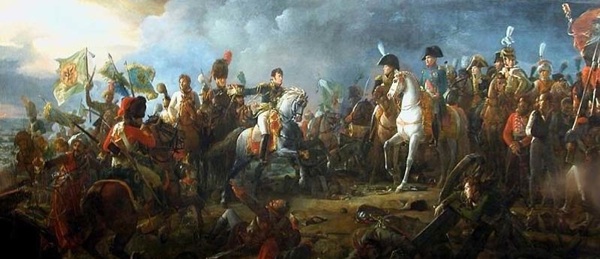
As the US military fights two grueling counterinsurgencies in Iraq and Afghanistan, these other Napoleonic Wars, in Italy and Spain, deserve new attention.
The December-January issue of Armchair General magazine includes the You Command Combat Decision Game article, “Fighting Napoleon’s Armies, Spain 1808.” This CDG puts readers in the role of British Gen. Sir John Moore as he opposes Napoleon’s army occupying the Iberian Peninsula. The following article by Pat Proctor provides an in-depth examination of the guerrilla wars Napoleon’s forces faced in Italy and Spain (1805 – 12) and draws some important lessons that are applicable to today’s insurgencies in Iraq and Afghanistan. – Editor
{default}The Other Napoleonic Wars
… And what they can tell us about the wars in Iraq and Afghanistan today
The Napoleonic Wars have captivated the Western world since the last cannon rang out at Waterloo in 1815, bringing them to an end. Volumes have been written about each of Napoleon’s campaigns. Countless oil paintings have created indelible images in the collective Western consciousness of magnificent armies colliding in combat. Napoleon’s revolutionary style of warfare inspired military theorists like Henri Jomini and Carl von Clausewitz to create theories of warfare that survive to this day. The Napoleonic Wars have even been a perennial favorite for tabletop and computer wargamers over the years. Austerlitz, Jena-Aurestädt, Raszyn, and Ligny–the names evoke images of splendidly adorned armies, arranged with mathematical precision, clashing in warfare on a grand scale.
 But at the same time these huge battles of sweeping maneuver over vast distances were taking place, brutal, grueling insurgencies in Italy and Spain were bleeding the French white and threatened to unravel Napoleon’s empire from within. They have received little attention through the years because they were messy. They lacked one cataclysmic battle or vast maneuvers that spanned the continent. Instead, they featured a litany of brutal atrocities and small, violent guerilla attacks. The battlefields were not at the doorsteps of Europe’s capitols, but rather along minor roads and in tiny villages in Europe’s sleepy backwaters. The battles were fought not by grand armies in geometrical order, but by insurgent bands and beleaguered garrisons. The combatants fought not for the high ideals of liberty or tradition, but for greed, self-interest, deep cultural animus, and survival.
As the US military fights two grueling counterinsurgencies in Iraq and Afghanistan, these other Napoleonic Wars, in Italy and Spain, deserve new attention. Though they happened two centuries ago, they can tell us much about why normal people take up arms and oppose powerful, modern armies. The lessons the French learned through success in Italy and failure in Spain are as relevant today as they were in the age of Napoleon.
A Sneak Preview
The Battle of Austerlitz in 1805 ended the so-called War of the Third Coalition, destroyed the Holy Roman Empire, and solidified Napoleon’s dominance of continental Europe. All that remained was for Napoleon to consolidate his hold on those nations that had backed the wrong side in the war. One such unfortunate country was the tiny nation of Naples.
 Naples was a third-rate power in a quiet corner of Europe that would one day be part of the unified nation of Italy. Ruled by Bourbon King Ferdinand IV, it had no colonial holdings and only tentative control over its outlying provinces. Its most problematic province was the rough and tumble region known as Calabria, the “toe” in the “boot” of modern-day Italy. This poor, rural, isolated corner of Europe was a land of banditry and superstition. The peasants struggled to scrape together a meager existence while fending off the brigands that mercilessly preyed upon them. The people knew nothing of the outside world except what they heard from their local priests, who themselves knew little of the world outside of Calabria.
After the battle of Austerlitz, the French flooded into Naples. King Ferdinand IV fled to Sicily, under the protection of the British, but was forced to abdicate when the Neapolitan army crumbled in Calabria under the weight of the 10,000-man French Armée de Naples. Napoleon placed his brother Joseph on the throne as Naples’ new king.
Though the Neapolitan resistance had shattered, the French had not “taken” Calabria. In fact, they found the province as hard to subdue as had King Ferdinand IV and his many predecessors. Soon, the French were under attack seemingly across the province, both by villagers angry at French demands on their scarce supplies and by brigands seeking loot. Smelling blood, the British patched together an invasion force and attacked the beleaguered French army at Maida. The French were routed and began a grueling retreat across the hostile, mountainous countryside of Calabria, hounded by brigands as they fled.
The tide turned just as rapidly with the arrival of French reinforcements in Calabria. The British, outnumbered, were forced to retreat back to Sicily. Napoleon’s brother-in-law, Joachim Murat, replaced Joseph Bonaparte–ironically called to serve as king of equally troubled Spain. Murat oversaw the brutal subjugation of the province by means that can only accurately be described as terrorism. In the end, Calabrian civilians feared the French more than the brigands. The insurgency slowly withered and died.
The Spanish Ulcer
The Kingdom of Spain, which had vaulted itself into preeminence with its head start in the colonization of the new world in the sixteenth century, was by 1808 a fading world power. Losses in the Thirty Years’ War and the rise of Britain as a naval superpower had eroded both its colonial holdings and its military might. Napoleon’s dominance of continental Europe after the War of the Third Coalition put Spanish King Charles IV in a precarious position. Napoleon was attempting to starve British trade by imposing his “Continental System” on his new empire, forbidding client states to trade with the Kingdom of Great Britain. Spain, trapped between these two leviathans, was obliged to side with the closer threat on its northern border.
Tiny Portugal also had a choice to make. It had remained neutral throughout the early Napoleonic wars, though it had a treaty with Britain and had already suffered invasion by Spain (secretly backed by the French). Portugal chose to side with its ally, Britain, but the tiny nation was no match for the combined might of the French and Spanish army. This combined army overwhelmed Portugal in only a month in late 1807. The Portuguese royal family escaped to Brazil and established a government in exile.
The campaign turned out to be as disastrous for Spain as it had been for Portugal. Under the pretense of reinforcing his garrison in Portugal, Napoleon began flooding Spain with French troops. Then the French began occupying Spanish forts for the “protection” of the Spanish people. Days later, the French seized power. In a rapid succession of French coups, Napoleon forced Charles IV to abdicate to his son, Ferdinand VII, and then to Napoleon’s brother, Joseph. While the Spanish establishment, the clergy and the aristocracy, quickly lined up behind the new monarch, what happened next shocked Napoleon to his core.
 The Spanish people, who only weeks before had greeted French armies with fanfare, rose in a general uprising against the French assault on Spanish sovereignty. All across Spain, civilians took up arms and began throwing the French out of their towns and villages. Spanish civilians and remnants of the Spanish army seized French ships in Spanish ports. On May 2, 1808, a mob of nearly 180,000 angry Spaniards marched on the garrison of 36,000 French in Madrid. The French were on the run across Spain as the security situation rapidly spun out of control. Napoleon had boasted before the campaign that 12,000 men could capture Spain. However, by the summer 1808, twice that many men were dead, the French had been handed their first defeat since the beginning of the Napoleonic Wars, and over 160,000 French soldiers were streaming into Spain to put out the growing fire.
Napoleon took personal command of French forces in Spain and, in a lightning campaign, returned his brother to the throne, crushed the Spanish army, and drove the British out of Portugal. However, Napoleon had to return to Paris at the beginning of 1809 to deal with a new threat from Austria. In his absence, the British returned to the peninsula and joined forces with the reconstituted Spanish and Portuguese armies.
After the return of the British, the war settled into a bloody equilibrium. The French tried in vain to engage in conventional warfare of the style that had been so successful on the rest of the continent, but the outmatched British and Spanish regulars refused to give the French the decisive battle they craved. While the Anglo-Spanish coalition avoided the decisive blow that would end their resistance, a crippling guerilla insurgency was boiling across occupied Spain.
The heart of insurgent resistance was the Montaña region of Navarre in northwest Spain, home of the largest, most organized guerilla army during the war. The culture of this mountainous region centered on landholding farmers. Under Charles IV, this region had been semi-autonomous and very different from the rest of Spain. First, its people spoke a different language–Basque. The region also had a stable local government which offered a level of political freedom that was unheard of in much of Europe. Women were able to own and pass on property. The region had a high percentage of aristocrats and clergy, but these titles were more honorific than indicative of real social distinctions. If there was any source of discord in Montañan society at all, it was primogeniture–the firstborn son inherited all of his father’s wealth while the younger children inherited nothing.
Initially, the French had huge numbers–over 100,000 men–in Navarre and had little trouble with the province. France was able to secure the lowlands of Ribera and the provincial capital of Pamplona without incident. The province, traditionally hostile to the central government in Madrid, did not participate in the general uprisings seen in the rest of Spain. However, when the French moved into Montaña and tried to impose their rule, they provoked a violent reaction from the populace. A huge pool of young, disenfranchised men, victims of primogeniture, formed the core of an insurgency that would frustrate French ambitions in Spain for the remainder of the Napoleonic Wars.
The French in Navarre oscillated between periods of brutal repression and total inaction, during which the insurgency grew even more powerful than before. The strong, local ties that had governed Montaña for centuries proved impervious to French terror tactics. The average Basque farmer in Montaña knew that the French would one day leave, but the powerful patriarchs of the region would remain long after the French were gone. The French army could never supplant the authority of the local elites.
As insurgent power grew, security in Navarre and the rest of northern Spain deteriorated. In the end, the French in Navarre were virtual hostages, besieged and unable to leave the walls of Pamplona. As French power collapsed in the rest of Europe after Napoleon’s disastrous Russian campaign of 1812, British and Spanish conventional forces finally pressed their attack and drove the French back across the Pyrenees.
It is surprising that Spain does not draw more attention from historians. During the ill-fated Russian Campaign of 1812, Napoleon lost over 700,000 people. However, only 300,000 of those were French (the remainder came from other subject countries of Napoleon’s empire). The Spanish ulcer, as the war came to be known, killed just as many Frenchman (at a rate of 50,000 per year). Yet, in many ways, it was even more costly than the Russian campaign. First, Spain required a huge commitment of manpower. At some points, as many as 350,000 French soldiers served in Spain–more than fought in Russia. Around 200,000 were required simply to secure supply lines.
However, Spain also took a moral and emotional toll on the French. It was impossible for even the most self-deluding Frenchman to claim he was spreading the French Revolutionary ideals–Liberté, Egalité, Fraternité–while quartering Spaniards and impaling them on trees. The persistent sense of insecurity in Spain also wore on the French Armée d’Espagne. As French clergymen Abbé de Pradt would write after the war, "It was, neither battles nor engagements which exhausted the French forces, but the incessant molestation of an invisible enemy, who, if pursued, became lost among the people, out of which he reappeared immediately afterward with renewed strength.”
The More Things Change…
Drawing lessons and analogies from history is always risky. Any event from history, especially in warfare, is unique to its age and dependent on the technology, tactics, and society in which it occurred. Yet the experiences of the French in Calabria and Navarre seem eerily familiar to anyone who has paid close attention to the headlines from Iraq and Afghanistan. Surely, these first guerilla wars in Western history tell us something about today’s counterinsurgencies.
When one looks more closely at these conflicts, patterns do begin to emerge.
Lesson 1: Motives Do Matter
 Despite four years of loud protest from America, much of the Muslim world persists in believing that the US is in Iraq for its oil. The US military did little to allay this suspicion in the aftermath of the initial invasion in 2003 when it guarded the Iraqi Oil Ministry while it did nothing to prevent looting of the National Museum.
Spaniards were equally suspicious of Napoleon in 1808 when he proclaimed that he was freeing Spain from the chains of monarchy but then put his brother on the throne. If the French had been serious about trying to spread the revolution, then when the Spanish forged a surprisingly liberal new constitution and created a representative body, the war should have ended. But, of course, the French weren’t there to spread the revolution. Napoleon was engaged in a grand criminal enterprise to make Europe his personal possession. His pretense left the Spanish no course but to resist.
America’s motives in Iraq, however, are not sinister. With the tremendous strain the US military now bears, no one would argue that the United States wants to remain in Iraq forever. Yet, as long as some Iraqis continue to believe that America’s intentions are malign, they will continue to fight the Coalition. Moreover, as long as many in the Muslim world continue to believe the US is in the Middle East to plunder its wealth and destroy Islam, jihadis will continue to stream into Afghanistan and Iraq to kill infidels. The US can significantly improve its lot in both countries if it works harder to change this negative perception of its intentions.
Lesson 2: Remember Why You Are There
 America went to Afghanistan to destroy the Taliban and al-Qaeda, deny terrorists a safe haven, and capture Osama bin-Laden. Yet, seven years later, US and NATO forces are still in Afghanistan, trying to disarm warlords, create a liberal democracy in Kabul, and stop opium production. America went to Iraq to find and destroy weapons of mass destruction and topple the regime of Saddam Hussein. Yet, five years later, the coalition is fighting Sunni insurgents and Shia militias, trying to counter Iranian influence, and building a liberal democracy in Baghdad.
The French experienced “mission creep” in Naples and Spain, as well. In Naples, Napoleon wanted to topple the Neapolitan regime and place his brother on the throne. Yet, a year later, they were embroiled in a bloody counterinsurgency to quell a territory that even the previous monarch had been unable to control. In Spain, Napoleon wanted both a military presence in the country and a pliable king on the throne to ensure Spain would not side with Britain. Yet, Napoleon spent seven years trying to compel Basque farmers to obey French authority.
Why did the French stray so far from their initial intent? In his seminal work, The Fatal Knot: The Guerilla War in Navarre and the Defeat of Napoleon in Spain, author John Lawrence Tone offers an answer. He says, “French troops behaved as if they were charged with the de-Chrisitianization of the province.” An ugly side-effect of the French Revolution in Catholic France was a fanatical anti-Catholic sentiment in the newly liberated French society. Wherever the French army travelled, it felt compelled to “liberate” the “oppressed” peoples it found from the “superstitions” of the Catholic Church.
Why has America strayed so far from its initial intent in Afghanistan and Iraq? What compulsions do Americans carry with them into foreign lands?
Lesson 3: Idle Hands are the Devil’s Playground
Why did the French have so much more trouble with the Montaña region of Navarre than the Ribera region? For that matter, why did they ultimately lose in Navarre when they prevailed in Calabria? There is a multitude of reasons, cultural and geographic. However, one important reason Montaña was the most difficult region to quell was the ready supply of unemployed, disenfranchised men from which the guerillas could draw replacements. In Ribera, most men were wage laborers; they had to work at their jobs in order to survive. In Calabria, nearly everyone was subsistence farming; simply scratching enough food out of the rocky soil to survive required every available man. In Montaña, by contrast, there was plenty of excess produce to maintain a high standard of living in the society, and plenty of excess men, disenfranchised because they were not firstborn, who could be spared to prosecute a guerilla war.
 One can see the same phenomenon today. Across the Middle East, unemployed young men, fired by religious zeal and disenfranchised by their own repressive regimes, are flooding into Iraq and Afghanistan to kill Americans. Inside Iraq, dispossessed, unemployed, young Sunni men with no industry to support them have taken up arms to attack the government and the Coalition they feel is responsible for their plight. Young Shia men, out of work and driven from their homes by al-Qaeda in Iraq and Sunni insurgents, are taking up arms and joining militias.
Compare this to the situation in the Kurdish north of Iraq. Seldom is a shot fired in anger. The rare instances of violence that do occur are imported from other areas of the country. Why? Are Kurds less violent than others in the Middle East? The answer is, at least in part, Kurdistan’s booming economy. Irbil is, by orders of magnitude, the fastest growing city in Iraq. Western businesses are beginning to invest heavily in the region. Kurdish Iraq has even begun advertising on Fox News Channel and other American television stations to entice investors.
Bringing economic prosperity, shared by all, to the Middle East is not the key to winning the Global War on Terrorism, but it would certainly be a sensible first step.
Lesson 4: Foreign Assistance Fuels Insurgencies
 Another important reason that Spain was a much harder fight than Naples was the intervention of outside actors. The British never fully committed to the war in Naples. The British did turn back the French at the Battle of Maida, but when the French came back in greater numbers, the British seemed to lose interest in the whole endeavor. By contrast, in Spain, the British arrived in great numbers to help the new Spanish junta, returned when driven out, and remained until the end of the war. Both the British and the free Spanish government funneled supplies to the guerillas. At one point, guerilla commander Francisco Espoz y Mina even received a commission in the Spanish army as a brigadier general.
In Iraq, Shia militias and political leaders get clandestine support from Iran. Sunni insurgents and former Ba’ath Party leaders get shelter, foreign fighters, and support from Syria. In Afghanistan, the Taliban and al-Qaeda are harbored in the ungoverned areas of Pakistan. The support these groups get from external actors fuels their struggle. Until they are isolated from this support, they will be very difficult to defeat.
Lesson 5: Population Control Is the Key
In 2006, America was pursuing a strategy of handing over security responsibility to Iraqis. The US military believed that its presence in Iraqi cities was fueling the insurgency, so it sought to reduce its visibility by pulling back into “mega-FOBs” (forward operating bases). However, in February 2006, al-Qaeda in Iraq bombed the Golden Mosque in Samarra and the country descended into an orgy of sectarian violence. Americans commuted to the battlefield each day, but otherwise watched from their bases while the country ripped itself apart.
 French power in Navarre was focused around the city of Pamplona. The French would sometimes venture out into Montaña looking for guerillas. Occasionally they would descend on a town and inflict acts of horrific violence and retribution, but they would always leave again. The guerillas were always wherever the French were not. When the French left a town, the guerillas would return and punish anyone who had helped the French. Most importantly, the guerillas didn’t leave.
In Calabria, it was the French, rather than the brigands, that controlled the populace. The French occupied villages. When they caught civilians helping the bandits, they made terrifying examples of them. If a town was too supportive of the enemy, the French simply ended it; they drove all of the people out and burned the village to the ground. In short, the people feared the French more than the brigands.
Of course, the US military can’t and won’t brutalize civilians or raze villages, but there is still a lesson here. In a successful counterinsurgency, one must raise the cost of helping the insurgent and lower the cost of turning them in. In early 2007, the US military instituted the “surge” in Iraq; they flooded Baghdad with American and Iraqi soldiers and cleaned out the city block by block. However, what they did next was even more important: they stayed. Suddenly, if an Iraqi civilian helped an insurgent, he was likely to be caught. At the same time, if an Iraqi civilian turned in an insurgent, the insurgent was likely to be caught. Controlling the population is the key to winning a counterinsurgency.
The US Army’s Take on the Spanish Insurgency
These lessons are not lost on the US Army. Prior to taking command of Coalition forces in Iraq, General David Petraeus spearheaded the development of the US Army’s new counterinsurgency manual (FM 3-24, Counterinsurgency, December 2006). The following is an excerpt from Chapter 4, “Designing Counterinsurgency Campaigns and Operations.”
Campaign Assessment and Reassessment?
"During Napoleon’s occupation of Spain in 1808, it seems little thought was given to the potential challenges of subduing the Spanish populace. Conditioned by the decisive victories at Austerlitz and Jena, Napoleon believed the conquest of Spain would be little more than a “military promenade.” Napoleon’s campaign included a rapid conventional military victory but ignored the immediate requirement to provide a stable environment for the populace.
"The French failed to analyze the Spanish people, their history, culture, motivations, and potential to support or hinder the achievement of French political objectives. The Spanish people were accustomed to hardship, suspicious of foreigners and constantly involved in skirmishes with security forces. Napoleon’s cultural miscalculation resulted in a protracted occupation struggle that lasted nearly six years and ultimately required approximately three-fifths of the Empire’s total armed strength, almost four times the force of 80,000 Napoleon originally designated.
"The Spanish resistance drained the resources of the French Empire. It was the beginning of the end for Napoleon. At the theater level, a complete understanding of the problem and a campaign design that allowed the counterinsurgency force to learn and adapt was lacking."
Source: US Department of the Army, FM 3-24, Counterinsurgency (Washington, DC: 15 December 2006), 4-1-2.
Major Pat Proctor (US Army) is an Iraq War veteran with over fifteen years of active service. As a joint operational planner, he participated in the 2007 campaign redesign for Operation Iraqi Freedom. He holds master’s degrees from the US Army Command and General Staff College and School of Advance Military Studies. The views expressed in this article are the author’s and do not represent those of the Department of Defense.

Excellent article. Educational and informative. Enlightened me on ‘The Other Napoleonic Wars’.
Thanks! I’m glad you enjoyed it.
Wanted to let you know that we (SAMS Seminar 7) discussed your article a bit in class as we analyzed Napoleon’s Spain and Italy campaigns. Much better than the 180 page book reading for this lesson!
Thanks for the note! I am glad to give back to a school that had such a profound impact on me.
I am interested in using your image of “The Third of May 1808” for a project for my Spanish class, where I am studying the works of Francisco Goya. I was wondering if you would grant me permission to a copy of the image for use in my project.