

Portsmouth Historic Dockyard
HMS VICTORY
2005 is the 200th anniversary of the Battle of Trafalgar. This battle was a momentous event in British history as it saw the defeat of Napoleon’s great Navy and ended any hopes the French Emperor might have had of invading Britain.
On the 21st of October in that year, 27 British ships of the line engaged 33 ships of a combined French and Spanish fleet. The combined fleet had broken out of the Spanish port of Cadiz the day before, with the intention of joining allied units elsewhere in order to attack the English Channel and escort French troops over from the continent.
But the British Fleet had been lying in wait for their enemy. They had effectively blockaded Cadiz for some time, bottling up the French and Spanish ships. As soon as the enemy fleet was sighted leaving the port, British eyes watched wherever they went.
{default}The resulting battle took place off the Cape of Trafalgar. Under the command of Vice Admiral Horatio Nelson aboard his Flagship HMS Victory, the British Fleet adopted the unusual strategy of aiming two lines of ships directly at the battle line formed by the combined fleet.
This was a risky strategy as it meant that the combined fleet could fire at the approaching British ships with impunity for up to 30 minutes before the British could bring their broadsides to bear.
When contact was finally made, the main British line, with HMS Victory in the lead, punched a hole through the enemy battle line. The second British line of ships, led by Admiral Collingwood rounded and engaged the rearmost enemy vessels. The front third of the combined fleet found itself immediately out of the battle, forced to swing around and turn to fight.
The effect was dramatic – in one stroke the British had shortened the odds, bringing overwhelming firepower against the French and Spanish. In addition, British gunners were able to fire and clear their guns in just 90 seconds, compared to an average time of 5-7 minutes for their opponents. This was mainly due to the fact that the British made a routine of gunnery practice every day. The French and Spanish ships, having been blockaded for months and unable to leave port, were not as well practiced with their gunnery drills and simply could not maintain the same rate of fire.
The end result saw the loss of 23 ships from the combined fleet. The Royal Navy did not lose a single vessel.
The British lost 449 men and a further 1,241 were wounded, whilst the French and Spanish fleets lost 4,408 men and another 2,545 wounded.
This single event ensured Britain’s absolute dominance of the seas for the next 100 years and forced Napoleon to look elsewhere for his conquests.
Unfortunately, at the very hour of victory, Lord Nelson himself was shot by a French sniper in the rigging of a nearby ship. Within hours he was dead, his body brought home having been pickled in a barrel of brandy.
The very centrepiece of a the Historic Dockyard is Nelson’s Flagship, HMS Victory herself. Laid down in 1758 (the same year of Nelson’s birth), Victory was commissioned in 1765 and is still in commission. Victory is the oldest commissioned warship in the world.
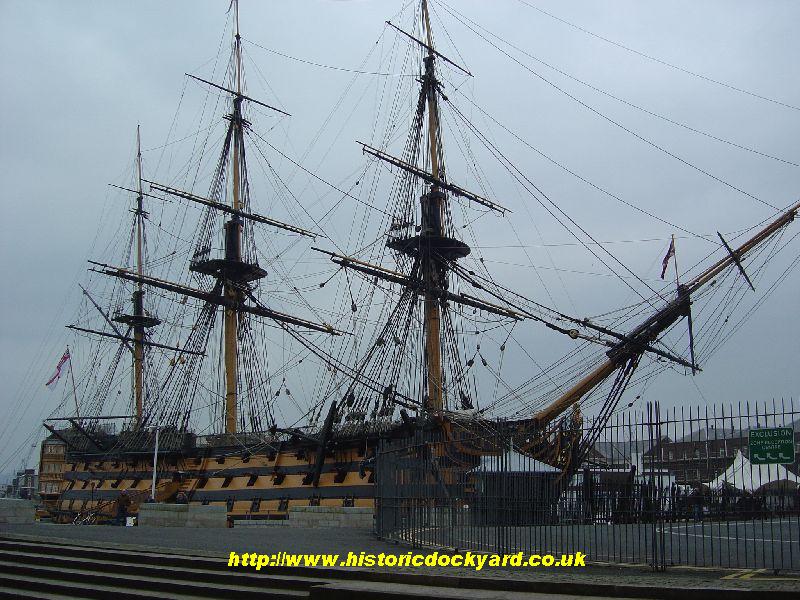
HMS Victory had a distinguished career even before Trafalgar. Modified throughout her lifetime, Victory assumed many forms, but was always considered to be a First Rate ship of the line, mounting over 100 guns.

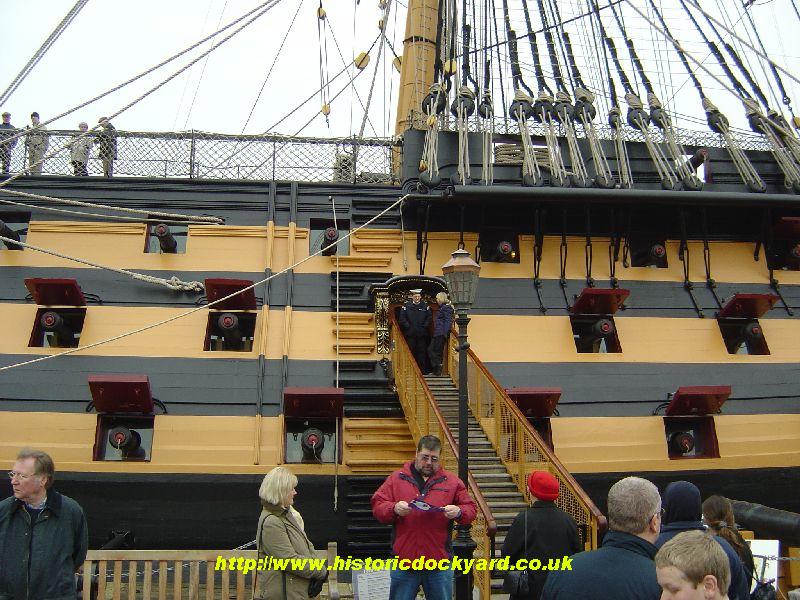
Although under constant maintenance, some new areas of Victory have been opened to the public recently, such as the hold ad the main magazine.
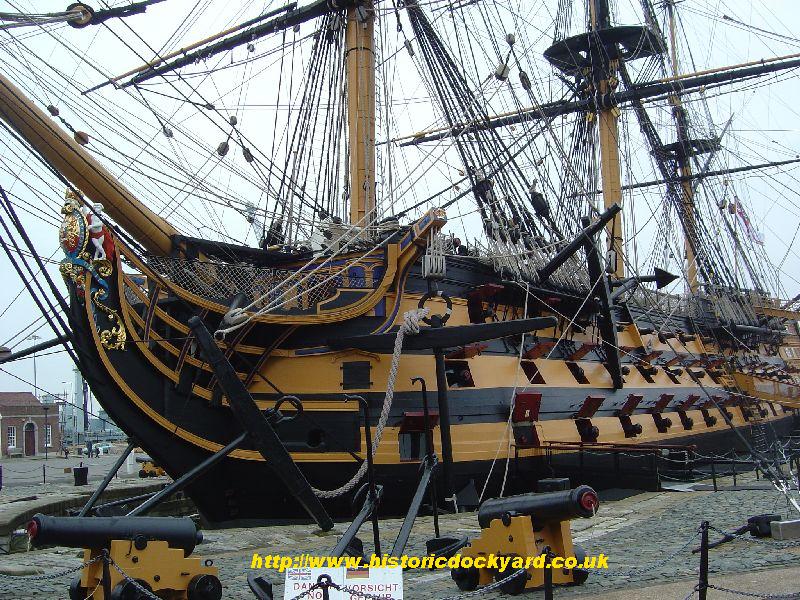
Fittingly, renovation is taking place using timbers from trees that Lord Nelson himself ordered to be planted in his lifetime. Concerned that timber supplies would be vital to maintain ship production, Nelson himself ensured the continued maintenance of timber stocks.
[continued on nextpage]
