

‘Miraculous Victory:’ Battle of Didgori, 1121
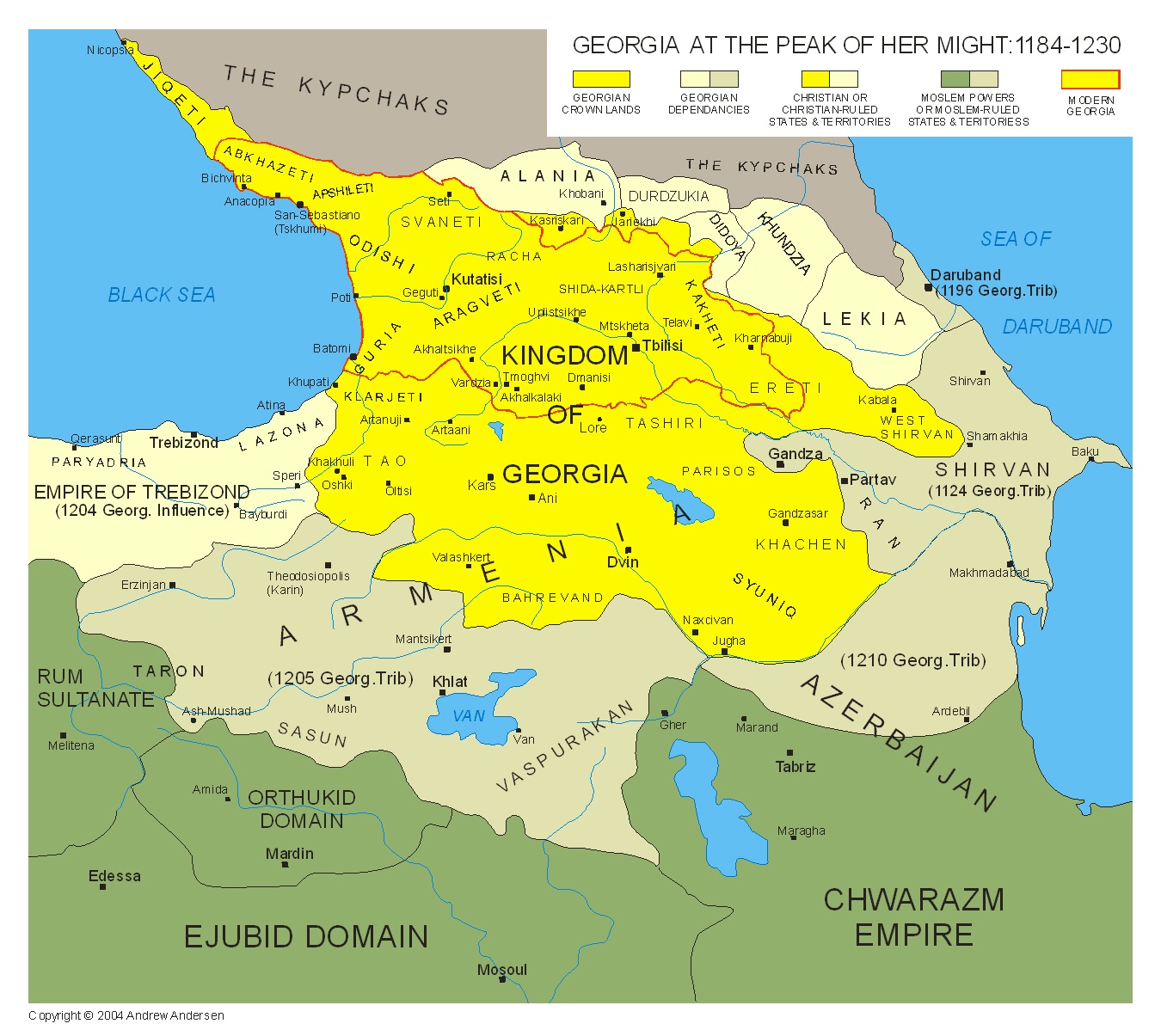 The Muslim powers became increasingly concerned about the rapid rise of this Christian state in the southern Caucasus and considered it a greater threat than the Crusaders in Palestine, whom they contained to the Mediterranean coastline. In 1121, Sultan Mahmud b. Muhammad (1118-1131) declared a holy war on Georgia and rallied a large coalition of Muslim states led by the Artuqid Najm al-din El-ÄŸazi and ToÄŸrul b. Muhammad, the Seljuqid ruler of Arran and Nakhichevan; the coalition was also supported by lesser but important local rulers, including “king of the Arabs” Dubays b. Sadaqa (1108-1135), and Tughan-Arslan, lord of Arzin, Bidlis and Dvin.[4] Najm al-din El-ÄŸazi had just celebrated his great victory over the Crusaders under King Roger of Antioch at Balat in 1119 and enjoyed a reputation as a highly experienced Muslim commander. The size of the Muslim army is still a matter of debate with numbers ranging from a fantastic 800,000 men (“Bella Antiochena”, Galterii Cancelarii), 600,000 Turks (Matthew of Edessa) to 400,000 (Smbat Sparapet’s Chronicle) while the estimates of modern Georgian historians vary between 100,000-250,000 men. Although the larger numbers certainly seem exaggerated, all sources indicate that Muslims made massive preparations, gathered an army that was many times larger than any engaged in the Holy Land and vastly outnumbered the Georgians. In mid-summer 1121, the Muslim troops advanced along various routes, with part of them passing the provinces of Arsan al Rum (Erserum) and al-Ghars (Kars), while Sultan ToÄŸrul moved through Ganja and Tughan-Arslan the Hunchback marched from Dvin.[5] Entering Georgian territory, they proceeded by the Manglisi-Didgori valley towards Tiflis.[6] By August 10, 1121, the enormous Muslim army bivouacked on a vast field near Didgori, about a day’s march (40 kilometers) west of Tbilisi.
The Georgians were well aware of the Muslim preparations and took necessary precautions. King David evacuated the regions along the Muslim invasion route and called up his troops. Georgians mustered some 56,000 men, including five hundred Alans, and two hundred Crusaders who arrived from the Holy Land. On August 11, 1121, King David led his army along the Nichbisi Valley from the ancient capital Mtskheta and divided them into two parts, with a larger group under his personal command and a smaller detachment under his son, Prince Demetre, that was to occupy secretly the nearby heights and strike the enemy flank at a signal. On the royal order, the Nichbisi Valley, behind the Georgian troops, was blockaded with fallen trees, leaving no other choice for the Georgian troops but to fight to the death. According to the French knight and historian Galterii, King David appealed to his warriors just before the battle: “Soldiers of Christ! If we fight with abandon, defending the faith of our Lord, we shall not only overcome the countless servants of Satan, but the Devil himself. I will only advise you one thing that will add to our honor and our profit: raising our hands to Heaven we will all swear to our Lord that in the name of love to Him, we will rather die on the battlefield than run….”
{default}The Georgian battle plan involved a cunning move. In the morning of August 12, some 200 cavalrymen departed the Georgian camp and rode to the enemy side, indicating they wanted to defect. The Muslim commanders, surprisingly, not only allowed them into the camp but also gathered to meet them. At a signal, the Georgians suddenly unsheathed their swords and attacked their new hosts, killing and wounding most of them. Observing confusion in the enemy camp, King David ordered general attack on the enemy positions while his son Prince Demetre charged the enemy flank. With their leadership in disarray, the Muslims in the frontline failed to organize any resistance, while those in the back soon became so disorganized that the entire battle lasted only three hours before the enemy army fled in disorder. According to a Georgian chronicler, King David’s troops pursued them for three days “putting all of them to the sword and leaving them to the carnivorous beasts and birds of the mountains and plains” of the Manglisi Valley. Armenian historian Mateos of Urfa wrote that “terrible and savage slaughter of the enemy troops ensued and the [enemy] corpses filled up the rivers and covered all valleys and cliffs,” and claimed that less than hundred men survived from every thousand. Muslim chronicler Ibn al-Asir lamented that “most of the Muslim host perished on the battlefield.” Muslim commander-in-chief El-ÄŸazi himself was wounded and fled with only twenty men while his son-in-law Dubays b. Sadaqa barely escaped after having his necklace torn from his neck (it was later donated to the Gelati Monastery). Georgians captured the entire enemy camp and the fabulous riches it contained.
The triumphant victory at Didgori captured the imagination of future generations. A contemporary chronicler marveled, “What tongue can relate the wonders which our sustaining Christ gave us on that day? And what are the narrations of Homer and Aristotle to me about the Trojan War and the bravery of Achilles or Josephus’ writings about the valor of the Maccabees or Alexander and Titus at Jerusalem?” The battle entered Georgian national consciences as a “miraculous victory” (dzlevai sakvirveli) and is without doubt one of the apogees of Georgian history. It signaled the emergence of Georgia as a great military power in the late 11-12th centuries and shifted the balance scales in favor of Georgian cultural as well as political supremacy in eastern Asia Minor.
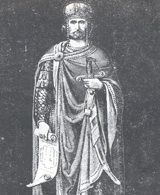 Following his success, King David captured Tbilisi, the last Muslim enclave remaining from the Arab occupation, in 1122 and moved the Georgian capital here. A well-educated man, he preached tolerance and acceptance of other religions. Muslim historian Ibn al-Azraq noted, “[David] granted aman to [Muslim] people and soothed their hearts and left them alone in all goodness. For that year, he abrogated their taxes and services…. He guaranteed to the Muslim everything they wished… He granted to them the call to prayer, the prayers and the reading [of the Quran] in public … he honored the scholars and Sufis by respecting their stature and [granting them] what they do not enjoy even among the Muslims.”[7]
In 1123-1124, Georgian armies were victorious in the neighboring territories of Armenia, Shirwan and the northern Caucasus, greatly expanding Georgia’s sphere of influence. King David’s daughters were married to Shirwan Shah Akhsitan and Prince Alexios, the son of Byzantine Emperor Nikephoros IV. Thus, by the time of King David’s death on January 24, 1125, Georgia became one of the most powerful states in all of Asia Minor. King David’s successful campaigns inspired the Georgian people, gave them confidence in their own strength and hope for a final victory over the enemy. The country enjoyed revival in agriculture and industry and Georgia’s cities flourished. For his contributions, King David was hailed by a grateful nation as aghmashenebeli (reviver, rebuilder) and canonized as a saint. His massive equestrian statue stands today on one of Tbilisi’s hills, still keeping watch over his people.
Alexander Mikaberidze, PhD, is assistant professor of European history at Louisiana State University in Shreveport. He holds a degree in international law from Tbilisi State University (1999) and a PhD in history from Florida State University (2003). He has taught European and Middle Eastern history at Florida State and Mississippi State Universities and lectured on strategy and policy for the U.S. Naval War College. He was the recipient of a Ben Weider Scholarship and has written and edited seven books, including the acclaimed The Battle of Borodino: Napoleon versus Kutuzov (2007), Historical Dictionary of Georgia (2007), and The Russian Officer Corps in the Revolutionary and Napoleonic Wars, 1792-1815 (2004; winner of the 2005 Literary Prize of the International Napoleonic Society).
Bibliography:
Kartlis Tskhovreba [Life of Kartli], ed. S. Kaukhchishvili (Tbilisi, 1955-1973)
Sh. Meskhia, Didgorskaya bitva [Battle at Didgori] Tbilisi, 1974)
R. Metreveli, Davit Aghmashenebeli [David the Builder] (Tbilisi, 1990)
Iv. Javakhishvili, Kartveli eris istoria [History of the Georgian People] (Tbilisi, 1965), vol. II.
V. Minorsky, “Caucasica in the History of Mayyafariqin,” Bulletin of the School of Oriental and African Studies (13(1949): 27-35.
W. E. Allen, A history of the Georgian people: From the beginning down to the Russian conquest in the nineteenth century, (New York, 1971)
I. Brosset, Histoire de la Géorgie: depuis l’antiquité jusqu’au XIXe siècle (St. Petersburg, 1857), 2 vols.
NOTES:
[1] Kartlis Tskhovreba, IV, 158-159
[2] Kartlis Tskhovreba, I, 335-337
[3] Kartlis Tskhovreba, I, 337-338, 340.
[4] Record of the administration of Najm al-din El-Ghazi in Minorsky, Caucasica in the History of Mayyafariqin, 32.
[5] Ibid., 32.
[6] Brosset, i/1, 366.
[7] Record of the administration of Najm al-din El-Ghazi in Minorsky, Caucasica in the History of Mayyafariqin, 34-35
Pages: 1 2

Congratulations on this unique and valuable article! For some reason, Western historians have until now, with this article, totally ignored the great victory at Didgori, even though there was a significant contingent of Knights Templars who took part in it. This Major Georgian contribution to the Crusades is simply forgotten, even by eminent historians such as René Grousset among others. There is mention in Walther Gauthier’s “Bella Antiochene”, only accessible in English in an out of print version by Ashgate Publications.
Anyone interested in Crusading history would do well to visit the site of the battle in the republic of Georgia. It is a most moving monument to the Christian faith of King Davit Aghmashenebeli, and more than well worth the trip and the hike from Tbilisi!
I think that part of temple knights in didgori war in not true. Because I think that when we have Georgians Who can fight with 10 seljuks together dont need temple knights for help. So as we can see in history we often fight with turks , persi , mongolian imper etc. So we have skills for fighting and I think that they would say like this to temple knights : Go and eat and drink , we will take care of them. This is part of our guest loving lifes.
right!?
lado you are clearly child or just far away from the reality my friend! Im Georgian as well and Im happy and proud of fact that båth Georgians and Crusaders battle together against common enemy!
Lado megobaro, reebs cer kargi ra, sircxvilia! Patara bavshvi xar tu ra aris ver gavige! Xvelapers tavi rom gavanebot, mere ra tu Jvarosnebi dagvexmarnen, magas ra jobia! Shegvegleba tkma rom Evropastan istoria gvaqvs da mtlad ucxo ar vart magatvis! Da rac upro meti gvaertianebs Evripelebtan, mit upro didi shansia rom Rusets chamovshordet da Evropashi gavertiandet, sadac chveni adgilia!
Shens adgilas an cavshlidi shens komentars, an shevcvlidi mainc!
Ai prosto vgizdebi ra, ra bavshvuri raxaca giceria..
Xmerti chvensken!
I don’t know have you ever read something about the Templars, but it’s simply IMPOSSIBLE for them to participate in that clash, not to speak with “significant contingent”.
My dear fellow, “Simply impossible” is wrong — the Templars were founded in 1118. Hugues de Pays was sent by Baldwin II to France to collect support and funds for the Order. While, I agree, a bit unlikely that any Templar contingent, significant or otherwise, participated in the Battle of Didgori in 1121, it is not impossible that some Knights may have been part of the Frankish knights who very clearly did jin forces with the Georgians. In Georgia there is an oral tradition of the Franks having been Templars –reason why I mentioned them. But I must agree, it cannot have been a significant contingent. The oral tradition was taken up, by the way, by NIKOLOZ films, in their project for a movie which unfortunately never materialised, “Sword of the Messiah” was its subtitle — I forget the main title (Didgori 1121?).
Just asking, do you know if the government of Georgia or a private organization plan a big commemoration on the 900th anniversary in 2021? Id love to attend.
I fear I found a little mistake in this article. King David’s army consisted of up to 40.000 georgian soldiers and up to 20.000 cipchak warriors, with a few hundred Alan mercenaries and franksish crusaders. David asked for at least one soldier from every noble georgian family and all of the cipchak tribes.
There was some kind of a relationship between the georgian rulers and some of the frankish partisipants of the crusades. That could explain why the little reinforcement arrived so quickly.
Question for DerantW : Do you have a source for this “relationship” between the Georgian rulers and the Frankish participants? Do you have any more information on the actual composition of the “little reinforcement” ? Were they crusaders from a specific nation, or knights of an order? Do you have any references for this?
David is still father of Georgians, though it existed 6000 years before David. This victory is more than just a battle for Georgians. David once defeated 100 000 Turks with 1500 soldiers. It’s a famous fact. He was incredible. Non-human man.
Georgians adore David the Builder. He made a whole EMPIRE ON CAUCASUS. His successors Conquered Azerbaijan, Trabzon, north Turkey, Armenia, part of modern Russia. His great granddaughter even invaded Iran. Their influence was from Greece till Jerusalem. Later David’s dynasty conquered Afganistan, but its said that Afganistan was conquered by Iranians!!!
Georgian:
– not all georgians think what you beleive in. Those conquests were irianian conquests.
This is one of the most important georgian war .. But it is a small part of .. We Georgians are not strong now, but hope get as dead as Lazarus rallyinging jesus rallying georgia s. … This will be very soon! I believe it!
Let live in peace. no more wars and killings History give us lesson for this bad things when people was killing each other for lands what they didn’t need. Be friendly to each other be care full for People lives and never forget that we are all peoples and we can help each other in many things that someone can’t do. this is teaching us history!!! I love my Country that named Georgia.
The interpretation of military “canning” of King David here is not
what it simce. It is only prersumed that 200 knights offered to change sides to the leaders of Muslim armies.
In reality it was always well known move of Georgians to fight with smaller force, that sometimes confused a much stronger enemy.
Thus, another king, the “Patara Kahi”, defeited Persian army much later by simply stopping his guard and waiting for atcking him much larger army. They were confused too by a much smaller army that didn’t run and lost.
i d like to contribute to the discussion on who Georgian army consisted of and reasons behind certain numbers.
so as its widely agreed there was 40,000 Georgians, 15,000 Qipcaqs, 500 Allans and 100 European Crusaders.
as you can see the majority of soldiers were Georgians, just about 70% of the whole army.
as we know from the history David IV invited 40,000 Qipcaq families to live in Georgian land on the premise that they would produce 1 soldier per family when there’d be a need for it. So simple calculation tells us that David IV could have 40,000 Qipcaqs taking part in Didgori battle. But he simply didn’t allow it. And the reason behind it was that he knew that it was the Battle of Georgia and Georgian Christian culture and mindset against the ones of Muslim. Tbilisi was Georgian Jerusalem which was also under Muslim rule. So it was purely Georgian battle against Muslim coalition and David wanted it to be won by Georgians.
From the strategic point of view you can argue why David risked so much and did not deploy all of its resources while difference in numbers was such high between Georgian and Muslim sides but all i can say about this is that firstly, David must have been very confident about his victory in this battle and on the other hand when you are facing the coalition of around a half million soldiers with 57,000 soldiers what you are thinking about is what sort of strategic moves tactical manoeuvres will take you to the victory rather than assuming that you could win with 25,000 extra soldiers which would make not so significant difference.
as the georgian historians tell us, there were about 200 french cavalry-men and they did NOT get to fight becouse our king didn’t want them to fight, they were watching the battle the whole time. as of 200 georgian soldiers who went to the enemy as the traitos of georgia, it was a trick and enemy paid for it.
Ok, i just want to say, that all this talk of Georgian fighter superiority seems a bit bogus to me. I grew up in Georgia and remember always hearing about these “legends” but from my point of view, that’s simply what they were. I mean we (Georgians) lost a lot more battles than we won so…. Don’t get me wrong, battle of Didgori was a great victory for Georgians and i do take pride in my heritage however, lets not get too carried away here. Obviously, overall strategy, tactics, and luck have a lot to do with the outcome of any engagment. I just feel a bit embarassed when i see some people boast about this supernatural abilities of Georgian fighters.
Agmashenebeli means builder, because he recovered Georgia from ashes and made it a stable and strong kingdom which led to the point of this victory. He is the most respected Georgian till this day.
This war is story.Ä°ts a fake war thrown by someones
Seljuks were best warriors of their time.
Seljuks never had more then 25.000 soldiers.
Ä°t was impossible to reach even to 80.000 soldier amount in that time.Only crusaders reached to 350.000 soldiers.
Seljuks stoped crusaders and defeated byzantines so easy.They like didnt even get lose.They never lost a conflict against Mongols until the sultan dies.
Seljuks were like gods for georgians in that time.Even a kid could laugh to that theory.
Seljuks fought against all crusaders with 10.000-15.000 soldiers in erzurum.
Lol you guys are so funny
You are a stupid and deceitful Muslim.
The empire of the Selchuks was then the largest, and they had the largest army. Almost always lost to the small crusaders.
In the Didgori battle they were at least 3 times more than Georgians.
And the Georgians perfectly won !
muslium gernal muhammad bin qasim at age of 17 conquer all india defeated all kings
well David was 16 when he ascended to throne. Ilghazi was greatest general of Seljuk empire and seems like he wasn’t worried at all and that was his big mistake. Also it was holy war or Jihad against Christian Kingdom of Georgia and muslim army was coalition and not only seljuk warriors.
Nothing can nor should be taken away from this victory of King David and his Georgian troops, supported by a number of other soldiers. There was no doubt that 200 Crusading Franks were present as their heavy cavalry charge into the Turks causing disarray is well documented. Unfortunately having read the comments here, the magnificence of the Georgian victory has undoubtedly been tarnished by what I can only describe as comments which are so far removed from reality as to be embarrassing. The victory was more about tactics and knowledge of home terrain than anything else, but the bravery of King David’s soldiers cannot be underestimated facing such odds. Please don’t spoil history by spouting nationalistic garbage. Be proud in truth.