

Hell’s Highway, 1944 – John Antal Turns a Game into a Narrative
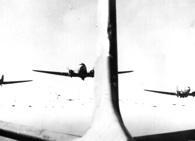 The Screaming Eagles dropped behind German lines as the base of this vast airborne carpet. The 101st had eleven bridges to take as part of the Market Garden plan: Capture Eindhoven and seize the bridges over canals and rivers at Veghel, St. Oedenrode, and Son. To attain these objectives the paratroopers of the Screaming Eagles must seize and hold a portion of the main highway extending over a twenty-five-mile area. Commanders realize that their units will be strung out on both sides of the single road that runs from Veghel to Eindhoven. In depth security would be sacrificed, and the paratroopers will have to march and countermarch to stop the Germans from blocking the route.
At the same time as the airborne landings, an entire corps of British armor, the British XXX Corps, began to charge forward with tanks and infantry along the single, narrow road to link up with the paratroopers. XXX Corps’s goal is to make sixty miles in forty-eight hours, pass through the U.S. 101st Airborne from Eindhoven to Uden, link up with the U.S. 82d Airborne in the middle around the town of Nijmegen, and finally reach the British 1st Airborne and a Polish Airborne brigade near the town of Arnhem. Arnhem and the bridge across the Rhine River is the ultimate prize. With this gateway into Germany, the Allies can overrun the German defenses along the powerful Siegfried Line and outflank Hitler’s legions. The daring plan is expected to end the war before Christmas 1944.
{default}The linkup of the armored forces with all three airborne landings is planned to occur within forty-eight hours. It seems a simple matter to drive the distance, especially since the Germans are so disorganized and demoralized after their traumatic retreat from France only a few weeks before.
Few things in war, however, go as planned. The Germans are much stronger than expected, and they have tanks – two SS Panzer Divsions.
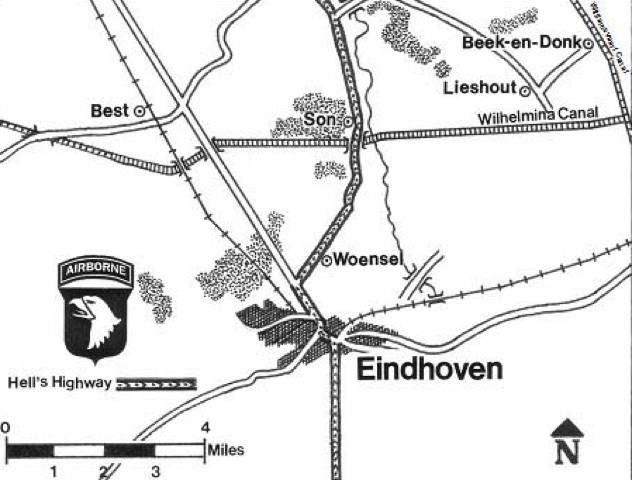 With the 101st Division Reconnaissance Platoon in high demand, since it is one of the few jeep-mounted units in the airborne division, Baker was detached from his squad early this morning and ordered to lead a combined group of American and British troops to scout a section of the Williamsvaart Canal. Dutch Resistance fighters warned that the Germans might try a surprise crossing of the canal and attack Hell’s Highway. With time the critical, overriding factor, any German resistance could mean a fatal delay in XXX Corps reaching Arnhem in time. The 101st is stretched paper thin along its entire portion of the line and is barely holding this sector of Hell’s Highway. Such a German attack could change the entire direction of the battle. With no one else to spare, Division Headquarters sent Baker and his pick-up team of Americans and Brits to scout the bridge over the Williamsvaart Canal near Lieshout and find out if the Dutch Resistance reports were true.
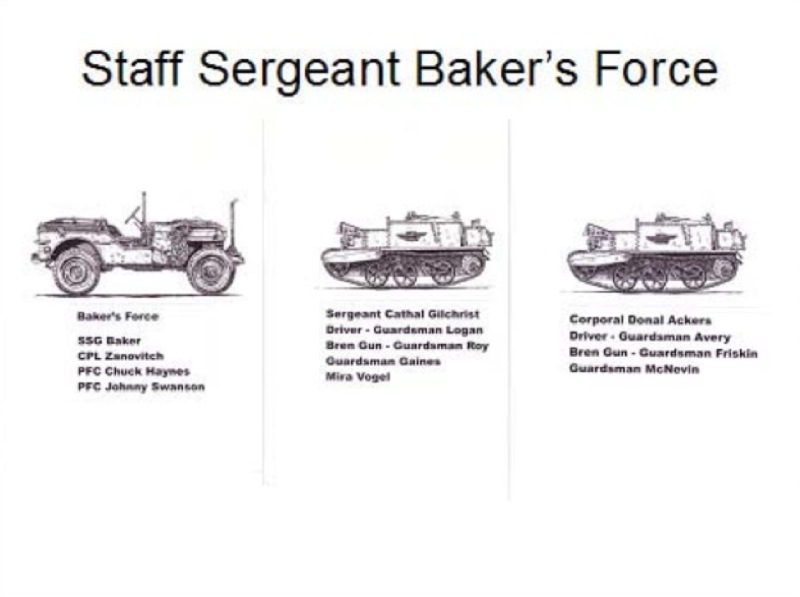 For this mission, Baker was assigned a bazooka team and a British infantry squad from the Irish Guards. The Irish Guardsmen are led by Colour Sergeant Cathal Gilchrist.
Colour Sergeant Cathal Gilchrist is nicknamed “Cat” by his men for his uncanny ability to survive countless battles. From Dunkirk in 1940 to the current fighting in Holland in September 1944, Cathal has survived without a major wound. Therefore, from the common myth that cats have nine lives, Cathal Gilchrist earned the nickname “Cat” for having escaped death so many times. His men believe that the bullet hadn’t been made with his name on it, and his confidence is infectious, manifesting in everything they do. His one quirk is that he is fond of song and has been known to hum, whistle, or sing his favorite tune, “The Minstrel Boy.” He even named his Bren Carrier, the ubiquitous, fully-tracked, lightly armored vehicle of the British army, in honor of this tune.
Cat’s Irish Guardsmen are now deployed next to their vehicles hidden in the trees. Baker’s two-man bazooka team lies next to their parked jeep. Cat signals for his men to wait by the vehicles and then slides forward through the trees to Baker’s side.
Baker and Zanovitch lie on the ground near the edge of the forest, looking toward the canal – and its vital bridge.
“What do you see?” Cat whispers as he reaches Baker and Zanovitch.
Baker points to the canal and says, “Germans.”
[continued on next page]

0 Comments
Trackbacks/Pingbacks