




China Marine: A Photo Essay


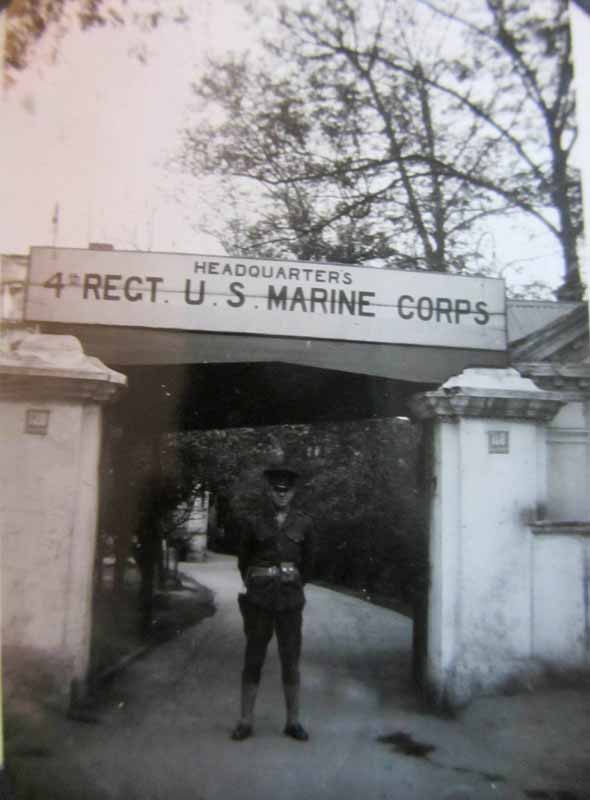



My grandfather Stephen Vitka had no idea what he would experience in his thirty years as a U.S. Marine when he enlisted in Bridgeport in January 1926. The son of a modest, immigrant family from Slovakia, his career would span an era of tremendous technological change, one that could be summarized as “horses to helicopters.†He rode on a horse during his two campaigns in Nicaragua in the late 1920s, and by the time he retired, he had been on helicopters, including shooting caribou during cold warfare training up in Labrador.
My grandfather’s career took him on various battleships (the Texas and Florida) and transport ships around the world, including Haiti and Cuba, then via the Panama Canal to Hawaii, Guam, the Philippines, China, Japan, the Guadalcanal campaign and Korea.
{default}Imagine how awestruck my grandfather was when he first saw Shanghai, the Forbidden City in Beijing and the Great Wall of China. We are very lucky he took and collected so many photos. I have never counted them, but there are hundreds. Many show scenes of daily life in China, as well as the international presence in Shanghai.
My grandfather was always proud of having served under the legendary Maj. Gen. Smedley Butler, the only U.S. Marine to win both the Brevet Medal as well as two Medals of Honor. The Brevet Medal was in those days awarded to Marine officers for actions meriting the MOH, but the Marine Corps for some reason felt the need to make the medals distinct, with the Brevet Medal having the same star pattern as the MOH, but with a different medal and red instead of blue ribbon.
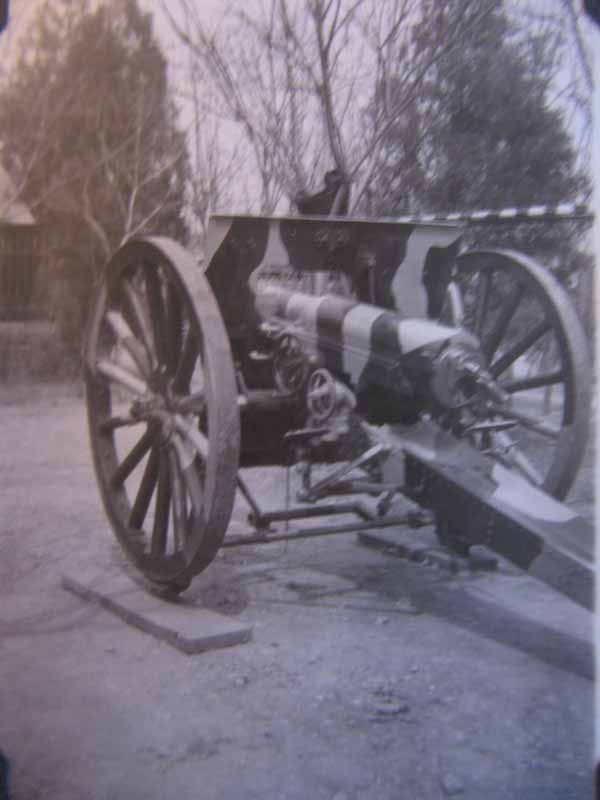
This photographic essay captures one chapter of the revolution in military technology. His tours in China with the 4th Marines in 1927-8 and again in 1930-1 illustrate changes in small arms as well as armored cars, artillery, aircraft and tanks. General Butler and others realized the importance of these technologies, increasingly integrating aircraft in joint air-land operations such as Nicaragua, where marine pilots basically invented close air support. One photo shows the armored cars that Butler and others used whenever more muscle was needed in street patrols.
Many historians who are familiar with the China Marines have considered their deployments in China choice assignments, and rightly so. However, that did not mean it was a harmless time of parades and sight-seeing tours. There were dangers. My grandfather was “Shanghai’d†one day by a Chinese gang, taken to a holding area, stripped naked and left in a locked, dark room for unspecified amount of time. In newspaper interviews he said “I thought I was a goner.†His cries for help were eventually heard by a passing English soldier, who somehow was able to free him, and my grandfather recalled the humiliation of running down streets in Shanghai stark naked.
The 1920s and early 1930s operations by U.S. Marines in China are a fascinating study. Having my grandfather show me these photos as a kid awed me and inspired me to go on to study history in college and graduate school. Besides the fascination with the exotic, a study in counterinsurgency operations and building relations with locals by U.S. Marines in China and Nicaragua also proves fruitful for those who have fought or will be deployed to Iraq, Afghanistan or elsewhere.
Thank you to Dirk Salverian, Don DiLoretto, Stefan Rohal and Owen Conner for their assistance with this article.

The photos are fascinating. I would love to read more about your grandfathers capture if there is more to tell. My great uncle was captured in World War II….
Thanks Dan. Glad you enjoyed them. Unfortunately, I have not more info. to share about his capture. However, I do have more stories and photos to share in the future about his WWII experience on Guadalcanal. Where was your great uncle captured?
This is a great story, and the photos are very interesting. Thanks a lot, Damien, for calling my attention to it. Semper Fi.
Thanks George. Glad you enjoyed it.
Excellent work! Can’t wait to see more. There’s more coming, right? RIGHT?
I hope so, Derek. There’s plenty more to talk about, including his experience at and materials from Guadalacanal.
Damien,
My father served two tours in Vietnam and I enjoyed your photo essay of your grandfather’s experiences. It is so important to keep the memory alive of these brave men and their service to our country.
Thanks, Dr. Hall
The pictorial essay honoring Capt. Stephen J. Vitka by his grandson is a wonderful tribute to his life and service, during an intense and rapid period of technological military advances. Yet the article brings Captain Vitka to life through the photographs he took and the stories his grandson–the author, speaker and historian Damien Cregeau–captures of of Vitka during his time in Peking. The man, the times and the history generate a keen interest in learning more about this Marine through his photographs and life as recounted so interestingly by his grandson.
Hi
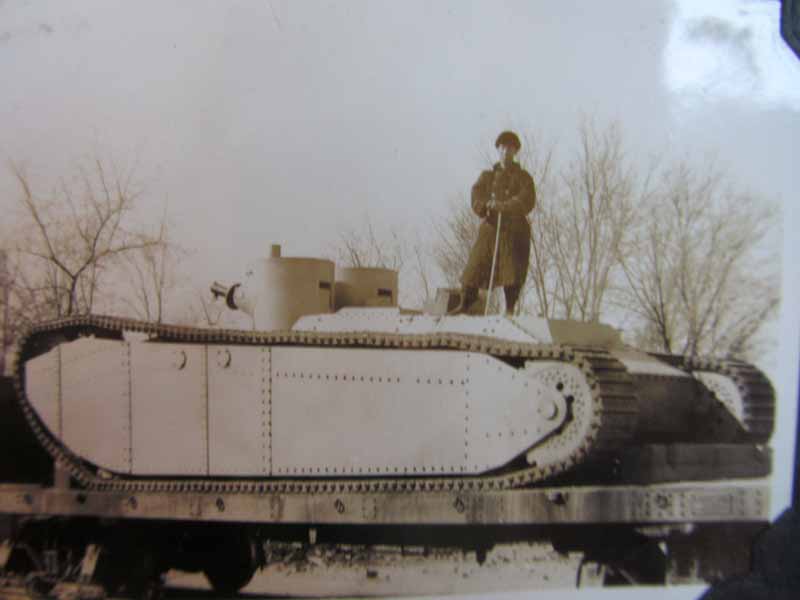
Very interesting story. Do you have any further information on the tanks shown in the last 2 pictures?
I’ve asked some fora on what they could be and it has stumped them.
Thanks Victor
Hi Victor,
Good question. One retired Marine tank commander friend of mine surmised it might be one of the experimental tanks made by J. Walter Christie. The problem is that the tank historians at Quantico don’t think it’s American, and that’s supported by the label on the back written by my grandfather: “Tank used by Chinese forces.” But then who made it? I wonder if we’ll ever know.
Damien Cregeau
Hello Damien
Thanks for the reply, I can see that this will become one of the unanswered questions on the internet :).
I’ve burrowed into what I can find on Interwar tank designs and I’m coming to more of an opinion that it is a homegrown modification.
Cheers
Victor
Hi Victor,
It would be interesting if the tank turned out to be an American prototype, as Marine tank historians ruled out it being American based on the machine gun design. If I can find the email I will let you know what they said.
Thanks,
Damien
We might have an answer as to this esoteric tank. This is the best guess I’ve read yet. Comes from a friend of a friend:
I’ve got a couple ideas . .
First, the twin machine gun turret layout of the vehicle suggests Russian / eastern origin . . very similar to some identified Russian and Polish vehicles later used in WWII . . the hull looks like a typical English ‘male’ tank . . the UK exported lots of light tanks (Carden-Lloyd), as well as some heavy models after WW I to Russian Asia , and Middel East . . some of these showed upin junkyards in afghanistan.
Machine guns look like Vickers or maxims w/ armored sleeves . .
Mu guess is a Russian import , low production series vehicle . . a prototype of some sort . . Seriously doubt this is of US origin . .
Hi Damian
Interesting thoughts. The twin turret eastern European vehicles are based on the Vickers 6 ton type A (http://en.wikipedia.org/wiki/File:Vickers_E.jpg). The hull is small for a British heavy tank, I agree that the machine guns look like Vickers or maxims, but with the arms trade in the 20s and 30s probably doesn’t mean much since in Asia some Vickers were rechambered to take US ammunition. I’m still puzzled by the periscope/cupola between the turrets. I doubt US origin, unlikely British, possibly Russian but my guess is still a local modification of tractors scammed on the Chinese by US merchants as ‘tanks’. I have tracked down another picture of the tank at http://farm7.staticflickr.com/6032/6408081541_eb1494c81f_o.jpg where it’s shown as ‘Tank of Chang Tsung Chang -2-7 armies’.
I’ll keep on poking around.
Cheers
Victor
Great find with those other pictures, Victor. Good attention to detail on your part, too. I’d love to know what that periscope is. Keep me posted. Cheers, Damien
Hi Damian:
I am
Existentialism? 🙂
Sorry for being frivolous.
Haven’t really found out any more information. Zhang Zongchang (Chang Tsung Chang) was allied with the Japanese against the Kuomintang, so is there any possibility of these being an experimental Japanese design?
The Japanese were experimenting with manufacturing tanks from the mid 20s.
Hi Damian:
My friends and I research the Chinese AFV history for a long time in Taiwan. We think that photos of prototype tank were very important evidence about first homemade tank in China.But We need more experts in Taiwan and HongKong to analysis it. May I use these photos on some medias or academic magazines with your permission to call more experts to join the Discussion?